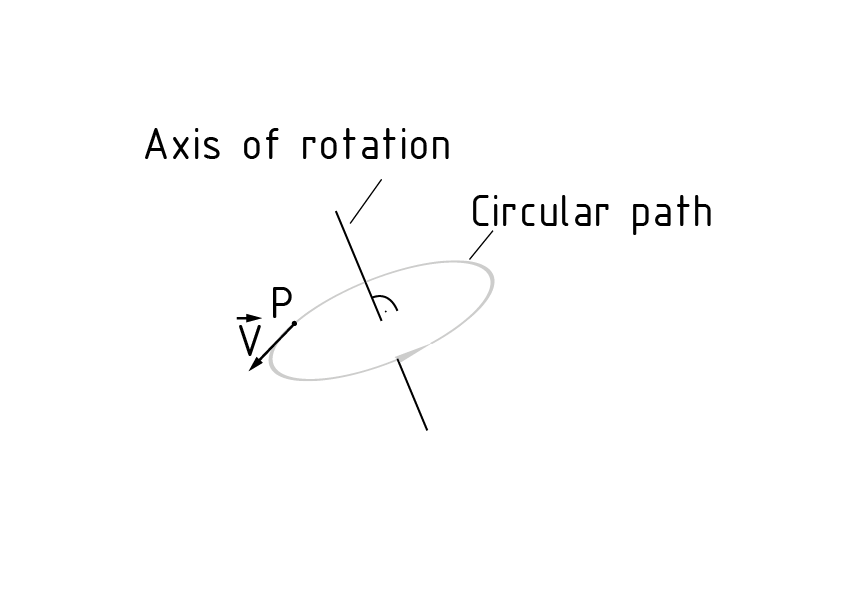

drehen
Drehen gehört zu den spanenden Fertigungsverfahren. Gedreht wird auf einer Drehmaschine, auf der das Werkstück rotiert und so die Hauptschnittbewegung ausführt. Der eingespannte Drehmeißel auf dem Werkzeugschlitten führt Zustell- und Vorschubbewegungen aus und hebt vom rotierenden Werkstück den Span ab.
Beim Drehen werden Schnittgeschwindigkeit, Vorschub und Schnitttiefe so optimiert, dass gute Spanbildung, hohe Oberflächengüte und möglichst hohes Spanungsvolumen bei geringer Schnittkraft erreicht werden. Das Drehstück wird erst geschruppt (hohe Abtragung) und dann geschlichtet (hohe Oberflächengüte).
Unerwünschte Regenerativeffekte können das Werkstück schwingen lassen, was zu einem wellenförmigen Schliff führt.
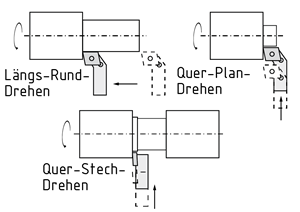
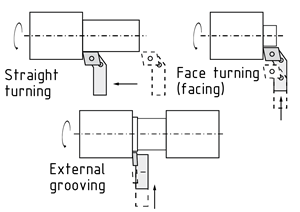
Nach Vorschubrichtung werden Längsdrehen (Werkzeug bewegt sich entlang der Rotationsachse) und Querdrehen (Plandrehen, Werkzeug bewegt sich senkrecht dazu) unterschieden. Werkzeugbewegungen im Winkel zur Rotationsachse erzeugen Kegelflächen, gekrümmte Werkzeug-Bahnen beliebige rotationssymmetrische Formen.
-
Beispielsätze:
- Der Gewindeschneidkopf führt die drehende und die lineare Bewegung aus.
- Einstellschraube mit linksdrehendem Feingewinde zum Einstellen der Loslagerseite.
- Den Stundenzeiger weiterdrehen, bis eine Zeit zwischen 3 und 9 Uhr eingestellt ist.

rotate
-
Example sentences:
- The honing tool either moves along the longitudinal axis or rotates.
- Depending on the particular application, it may be necessary to rotate the spacer washers in the housing.
- Ideally, the seat should dip forward slightly and rotate.
turn
-
Example sentences:
- Consequently, the floating bearing is secured by turning to the right, as usual.
- Adjusting screw with left-turning fine thread for adjusting the floating bearing side.
- Improvement, increased efficiency and innovation are what keep the wheels of the economy turning.
- The return height of the tool can be adjusted as required.
- The return stroke (non-cutting stroke) returns the tool to the starting position.
- Additional stopper can be used to adjust the return height
turning
-
Example sentences:
- Consequently, the floating bearing is secured by turning to the right, as usual.
- Adjusting screw with left-turning fine thread for adjusting the floating bearing side.
- Improvement, increased efficiency and innovation are what keep the wheels of the economy turning.

girando
girar
rotar
Torneado
El torneado es un proceso de maquinado. Un torno tuerce la pieza de trabajo para generar el movimiento de corte principal. Una herramienta de torneado por sujeción en el patín lleva a cabo la alimentación de entrada y los movimientos de alimentación, y remueve el material en forma de virutas de la pieza de trabajo en rotación
Durante el proceso de torneado, la velocidad de corte, la alimentación y la profundidad de corte son optimizadas para lograr una buena formación de viruta, una alta calidad de superficie y la tasa de remoción más alta posible con una fuerza de corte baja. La pieza de torneado es primero trabajada en bruto (alto volumen de remoción) y luego es terminada (alta calidad de superficie).
Los efectos regenerativos no deseados pueden causar que la pieza de trabajo oscile, lo cual genera un acabado disparejo.
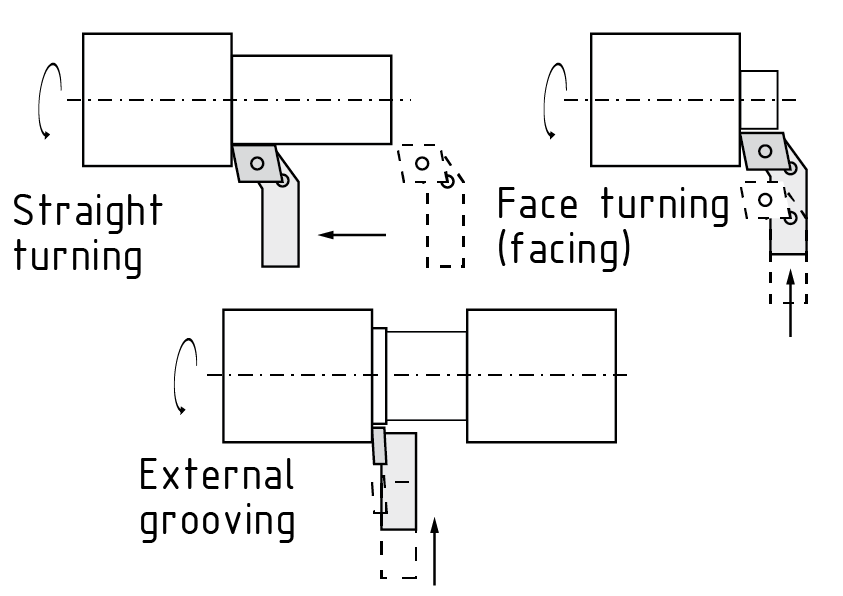
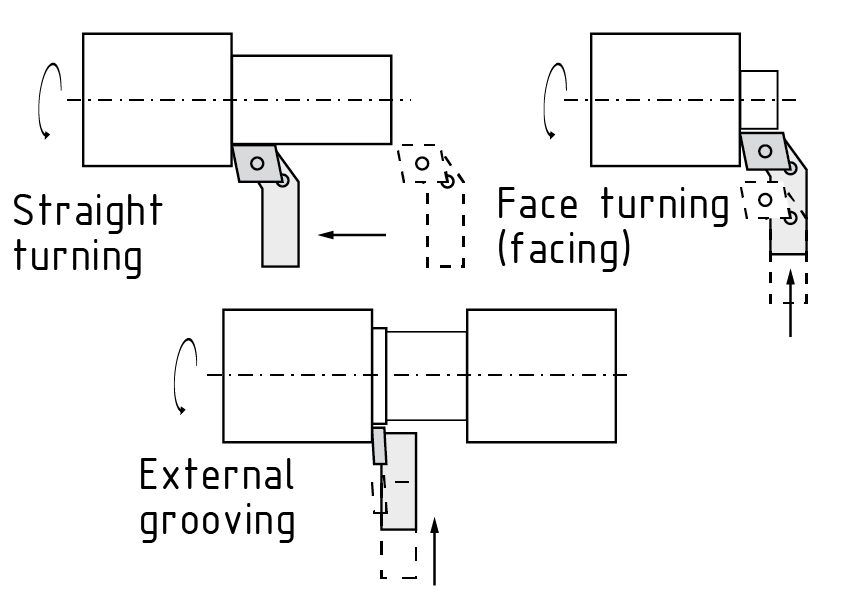
Dependiendo de la dirección de alimentación, se debe distinguir entre el torneado recto (la herramienta se mueve a lo largo del eje de rotación) y el torneado transversal (torneado de cara, la herramienta se mueve perpendicular al eje de rotación). Mover la herramienta en un ángulo según el eje de rotación crea una superficie cónica; las rutas de herramienta curvas pueden producir diferentes formas simétricas rotativas.
Varios procesos de torneado
Torneado
El torneado es un proceso de maquinado. Un torno tuerce la pieza de trabajo para generar el movimiento de corte principal. Una herramienta de torneado por sujeción en el patín lleva a cabo la alimentación de entrada y los movimientos de alimentación, y remueve el material en forma de virutas de la pieza de trabajo en rotación
Durante el proceso de torneado, la velocidad de corte, la alimentación y la profundidad de corte son optimizadas para lograr una buena formación de viruta, una alta calidad de superficie y la tasa de remoción más alta posible con una fuerza de corte baja. La pieza de torneado es primero trabajada en bruto (alto volumen de remoción) y luego es terminada (alta calidad de superficie).
Los efectos regenerativos no deseados pueden causar que la pieza de trabajo oscile, lo cual genera un acabado disparejo.
Dependiendo de la dirección de alimentación, se debe distinguir entre el torneado recto (la herramienta se mueve a lo largo del eje de rotación) y el torneado transversal (torneado de cara, la herramienta se mueve perpendicular al eje de rotación). Mover la herramienta en un ángulo según el eje de rotación crea una superficie cónica; las rutas de herramienta curvas pueden producir diferentes formas simétricas rotativas.
Varios procesos de torneado

旋转
车削
车削属于机械加工工艺。车床转动工件并产生主切削运动。夹紧在转杆上的车刀进行横切和进给运动,从旋转工件上移除碎屑材料。
在车削过程中,切削速度、进给和切割深度的优化利于实现良好的切屑效果、高表面质量和低切割力下的最大移除速率。车削部件第一次进行粗加工(高移除容量),然后完成精加工(高表面质量)。
不良累加效果可能引起工件摆动,导致不均匀的光洁度。
根据进给方向的不同,可分为直刀(刀具沿旋转轴线方向移动)和横刀(端面车削,刀具垂直于旋转轴线方向移动)。与旋转轴线成一定角度移动刀具可以车制锥形表面;弯曲刀具路径可以车制各种旋转对称的形状。
各种车削工艺
车削
车削属于机械加工工艺。车床转动工件并产生主切削运动。夹紧在转杆上的车刀进行横切和进给运动,从旋转工件上移除碎屑材料。
在车削过程中,切削速度、进给和切割深度的优化利于实现良好的切屑效果、高表面质量和低切割力下的最大移除速率。车削部件第一次进行粗加工(高移除容量),然后完成精加工(高表面质量)。
不良累加效果可能引起工件摆动,导致不均匀的光洁度。
根据进给方向的不同,可分为直刀(刀具沿旋转轴线方向移动)和横刀(端面车削,刀具垂直于旋转轴线方向移动)。与旋转轴线成一定角度移动刀具可以车制锥形表面;弯曲刀具路径可以车制各种旋转对称的形状。
各种车削工艺
转动