

Förderband
Beschreibung:
Nach Bedarf können am Förderband zusätzlich Führungsschienen und Relingsysteme für die zuverlässige Seitenführung oder eine Steuerung mit Sensorik zur Regelung von Geschwindigkeit, Start/Stopp und Staufunktionen angebracht werden. Im kostenfreien Lernmodul der item Academy lernen Sie die Grundlagen der Bandfördertechnik im Detail kennen.
Kraftübertragung
Definition
Was ist ein Förderband?
Ein Förderband ist eine stationäre Förderanlage zum kontinuierlichen Transport von Gütern, Materialien und Produkten. Es besteht aus einem endlosen Gurt, der von Motoren angetrieben wird und über Umlenkrollen läuft. Dabei erfolgt der Transport kontinuierlich und ohne Unterbrechung, weshalb das System zur Kategorie der Stetigförderer zählt.
Die Hauptaufgabe eines Förderbands ist es, den Materialfluss zu automatisieren und Prozesse dadurch effizienter zu machen. Förderbänder sind u. a. fester Bestandteil der modernen Industrie und kommen in vielen Bereichen zum Einsatz, z. B. in der Logistik, Intralogistik und Produktion verschiedenster Branchen.
Die Hauptaufgabe eines Förderbands ist es, den Materialfluss zu automatisieren und Prozesse dadurch effizienter zu machen. Förderbänder sind u. a. fester Bestandteil der modernen Industrie und kommen in vielen Bereichen zum Einsatz, z. B. in der Logistik, Intralogistik und Produktion verschiedenster Branchen.
Gut zu wissen
Wie funktioniert ein Förderband?
Die Funktionsweise des Förderbands folgt einem Grundprinzip: Ein endloser Fördergurt oder Riemen aus widerstandsfähigem Material (Gummi oder PVC) wird über die Antriebs- und Umlenkrolle gespannt und durch einen Elektromotor in Bewegung gesetzt. Üblicherweise wird ein Förderband durch einen Elektromotor mit integriertem Getriebe angetrieben. Verschiedene Übersetzungen ermöglichen dabei unterschiedliche Geschwindigkeiten. Legt man nun Transportgut darauf, wird es je nach Oberfläche des Bands staufähig oder nicht staufähig transportiert. Nicht staufähig ist ein Förderband dann, wenn Produkte auf dem laufenden Band angehalten werden, ohne dass das Band selbst stoppt.
Welche Arten von Förderbändern gibt es?
Es gibt vier gängige Förderbandarten in der Industrie. Die Auswahl der richtigen Lösung ist von Transportgut, individuellen Anforderungen und Einsatzbereich abhängig:
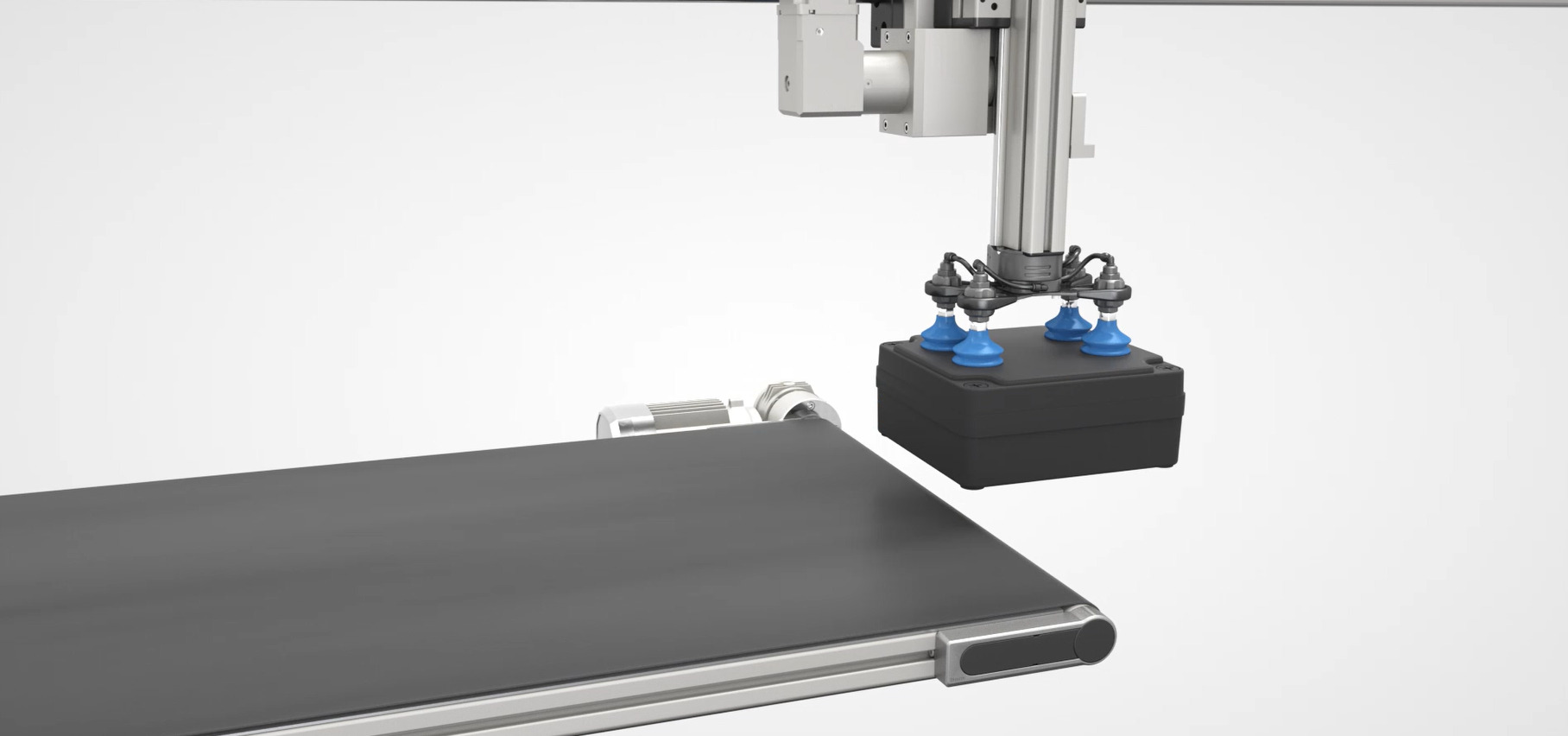
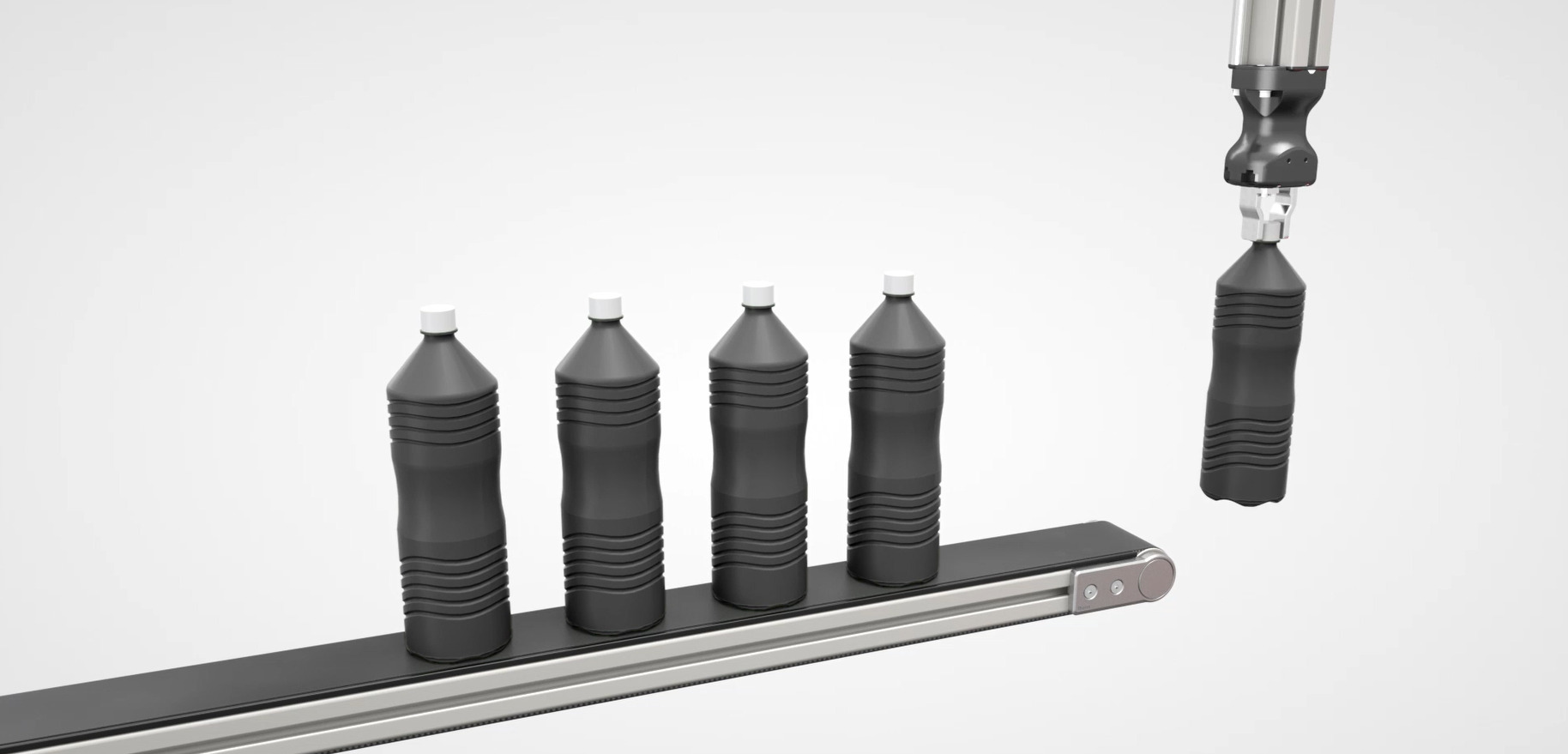
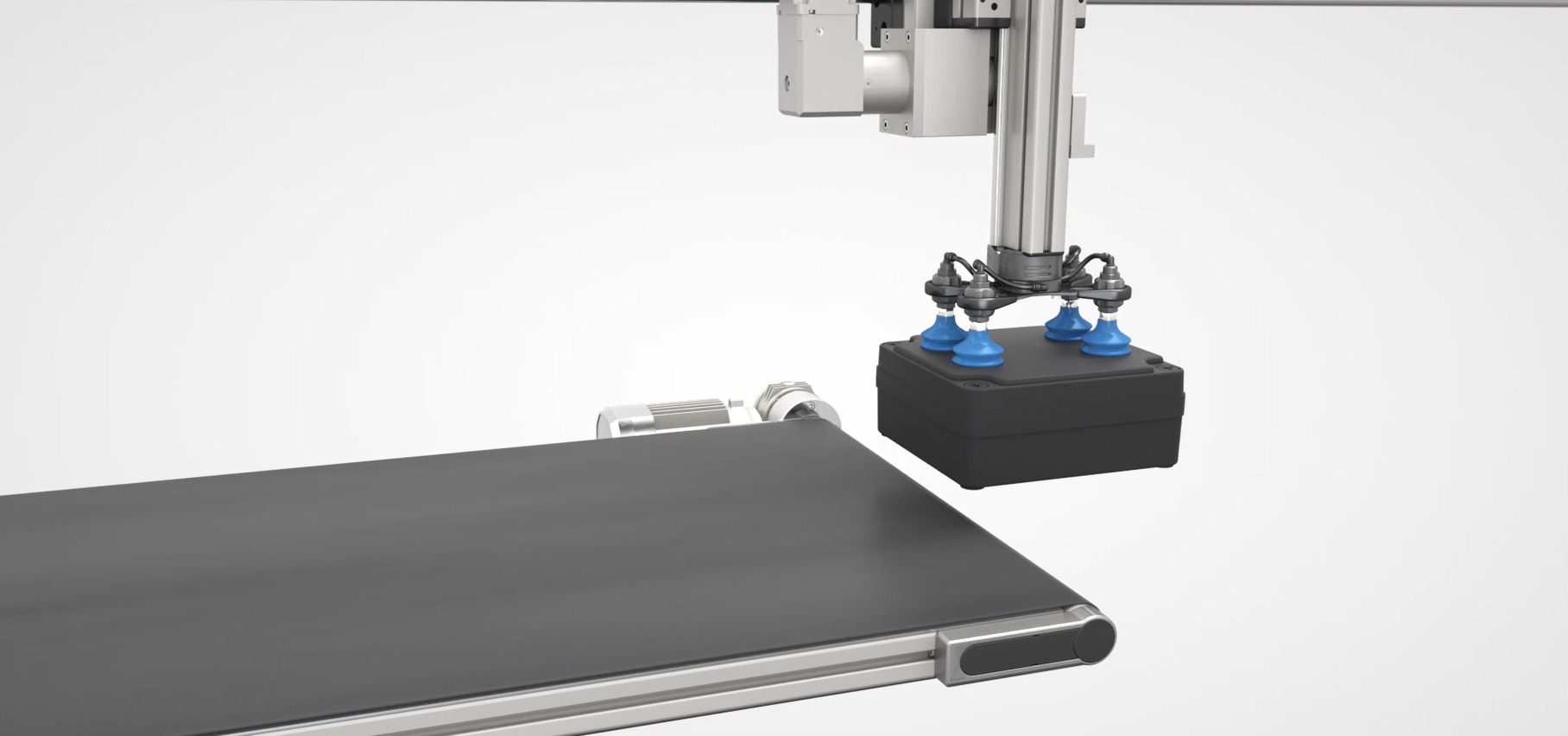
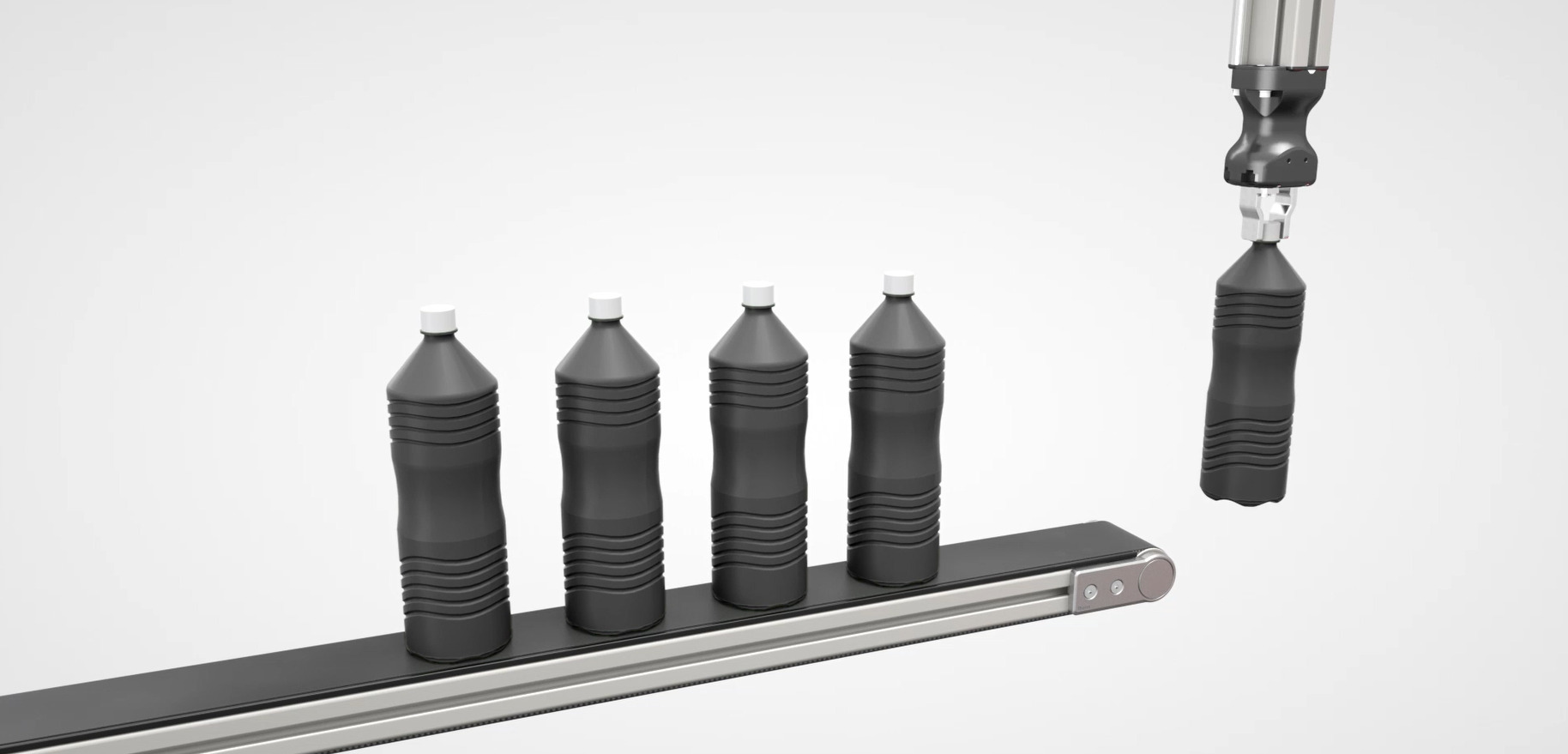
- Gurtförderer: Dieses Förderband verfügt über ein durchgehendes Flachband und eignet sich besonders gut für Stückgüter mit unebener Auflagefläche. Das Band wird durch eine kraftschlüssige Verbindung (die Haftreibung) zwischen Antriebsrolle und Band bewegt. Der Gurtförderer eignet sich für Aufgaben wie den Abtransport von Produktionsartikeln, das Sortieren und Vereinzeln von Teilen und leichtem Transportgut sowie zur Verkettung von mehreren Produktionsstätten.
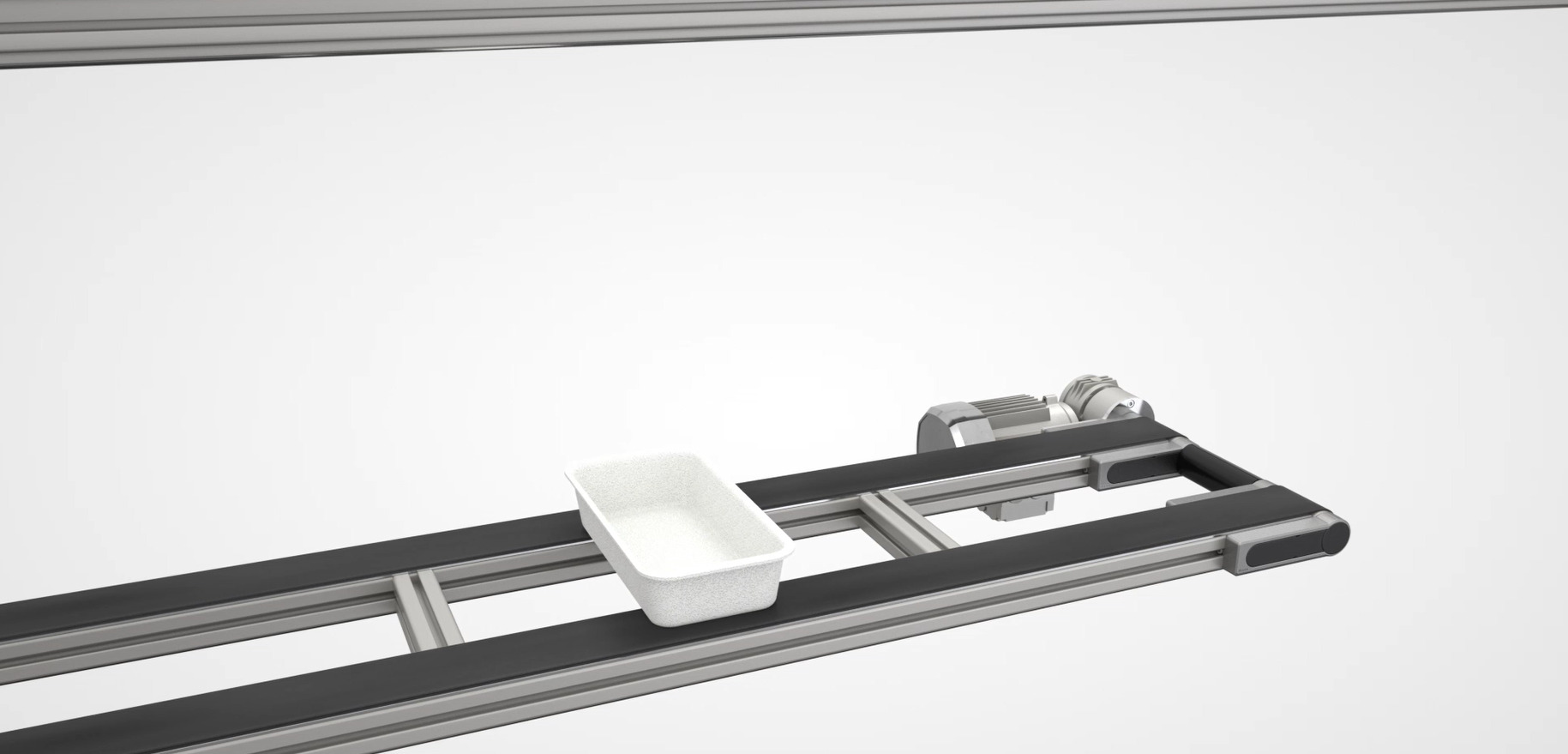
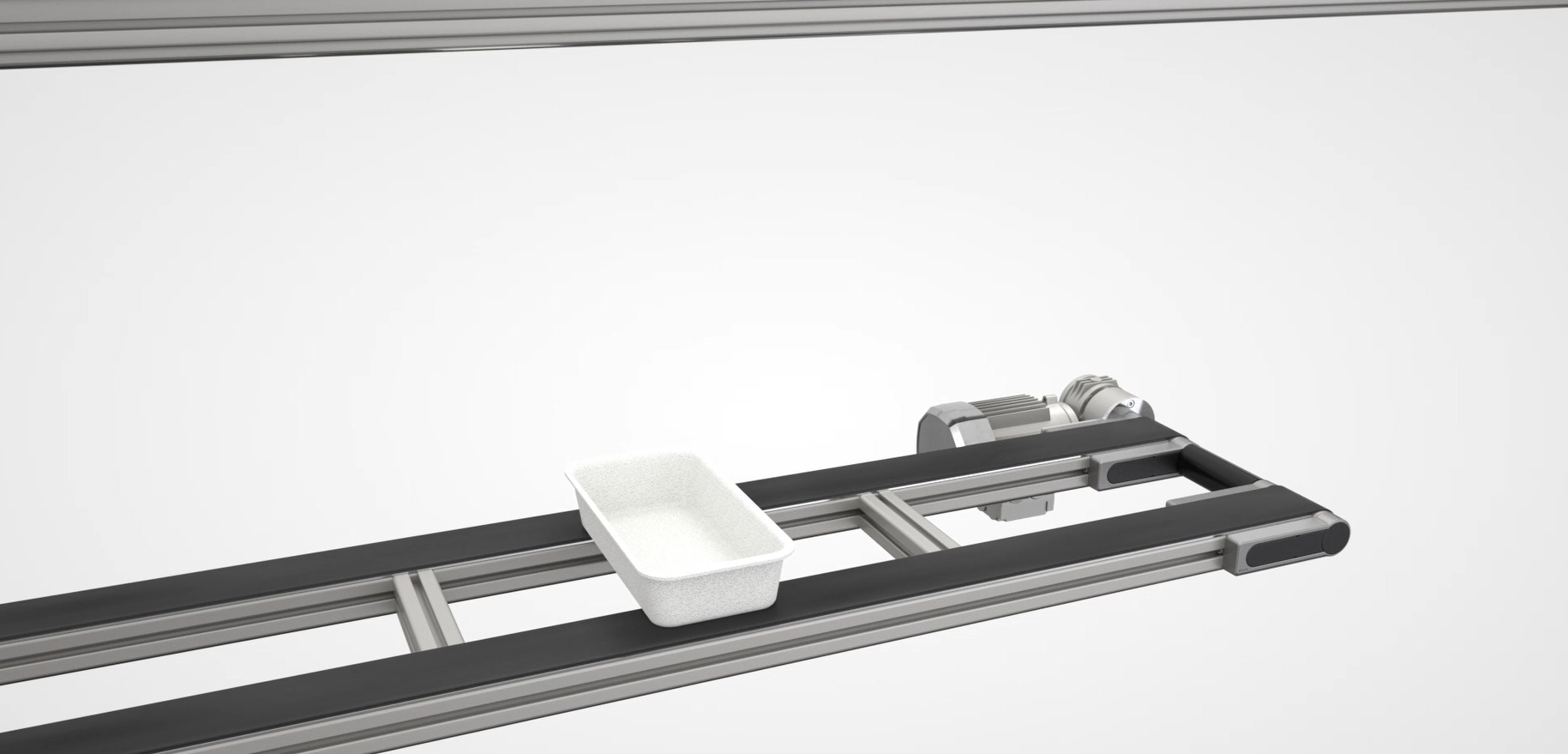
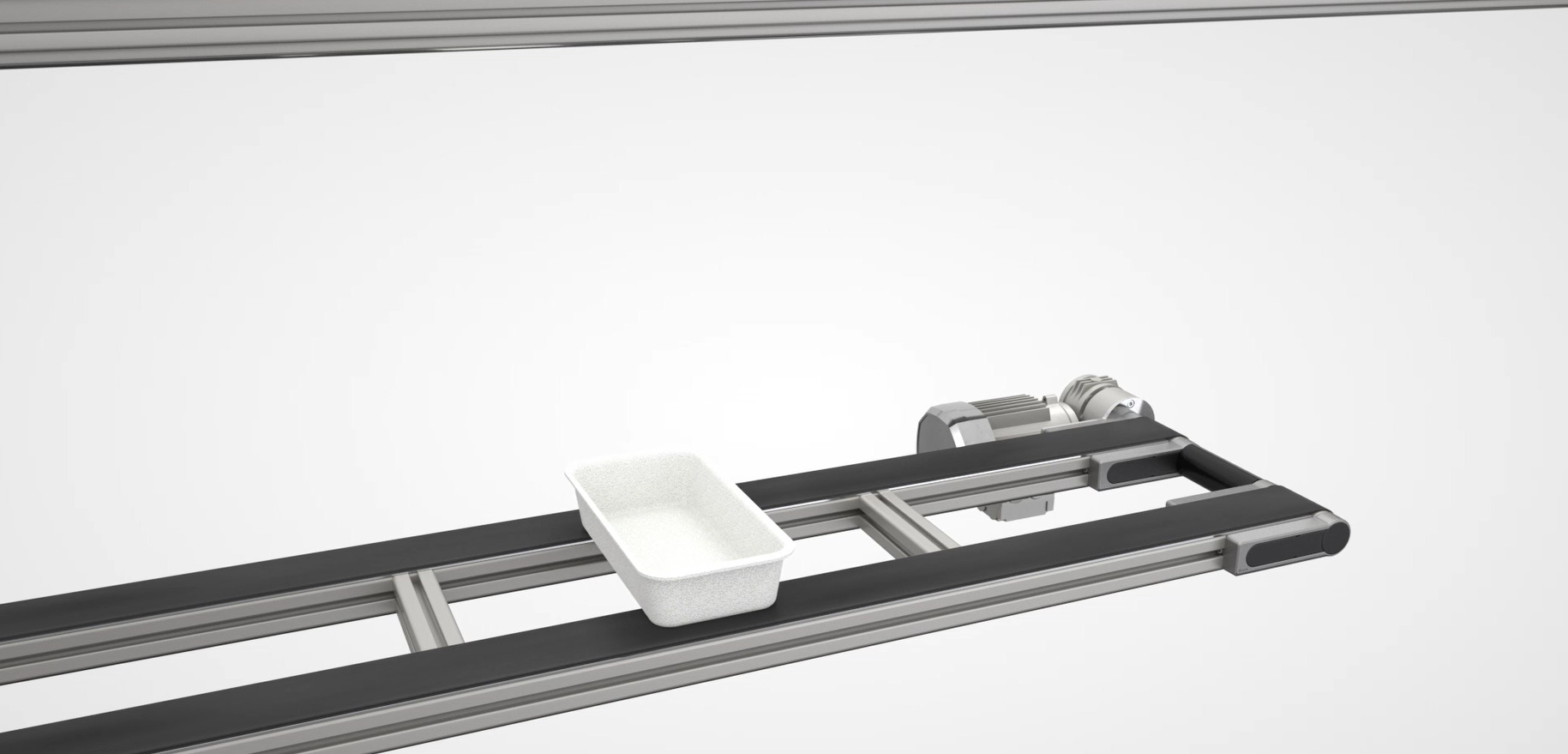
- Doppelgurtförderer: Dieser ist ähnlich aufgebaut wie der Gurtförderer, verfügt aber über zwei parallel laufende Bänder. Der Doppelgurtförderer wird meist für den Transport von breiteren und eigenstabilen Produkten eingesetzt.
- Zahnriemenförderer: Statt eines Flachbands wird hier ein formschlüssiger Zahnriemen genutzt. Er bewegt sich durch eine formschlüssige Verbindung (die Verzahnung), zwischen Zahnrad und Zahnriemen. Dieses Förderband eignet sich für den Transport schwerer Lasten.
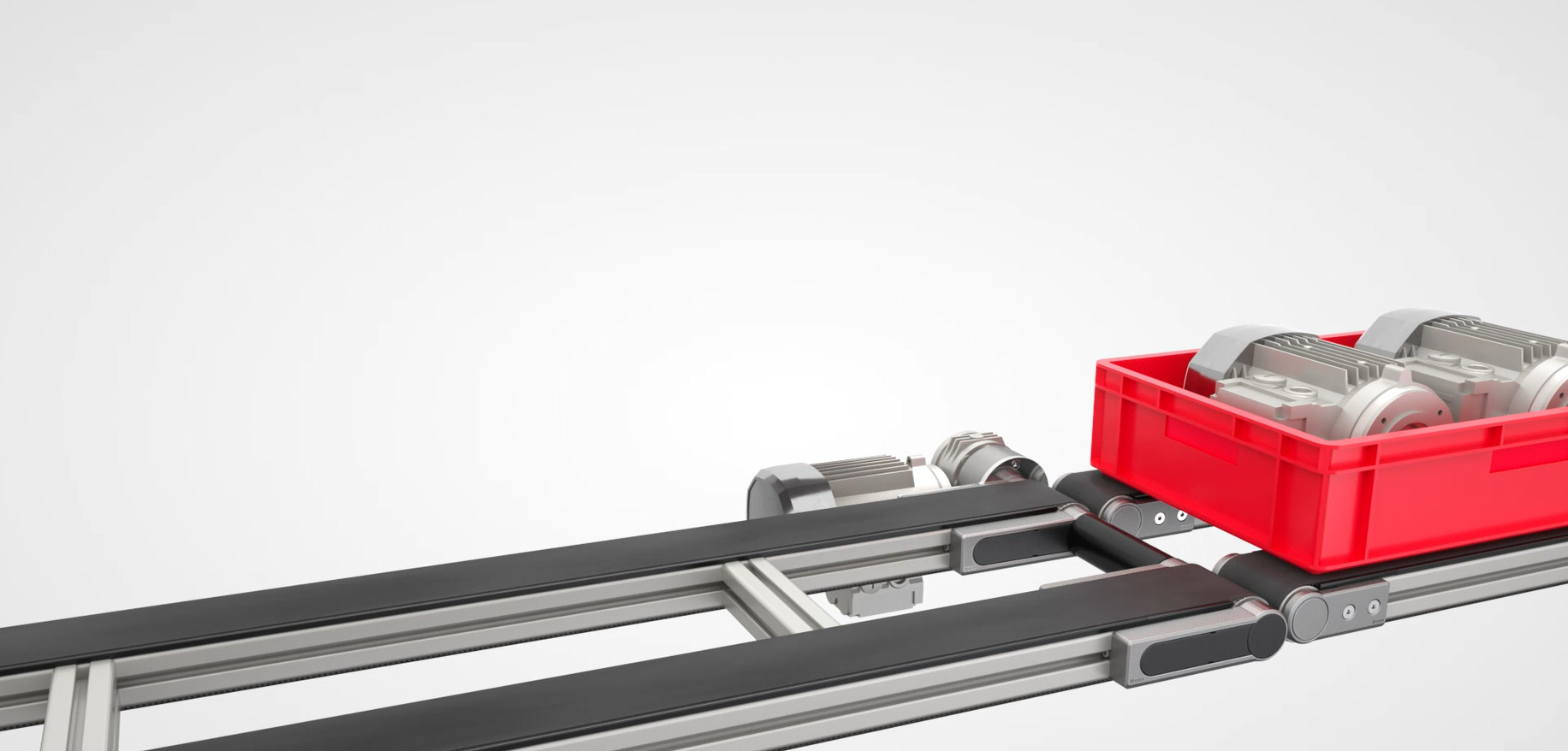
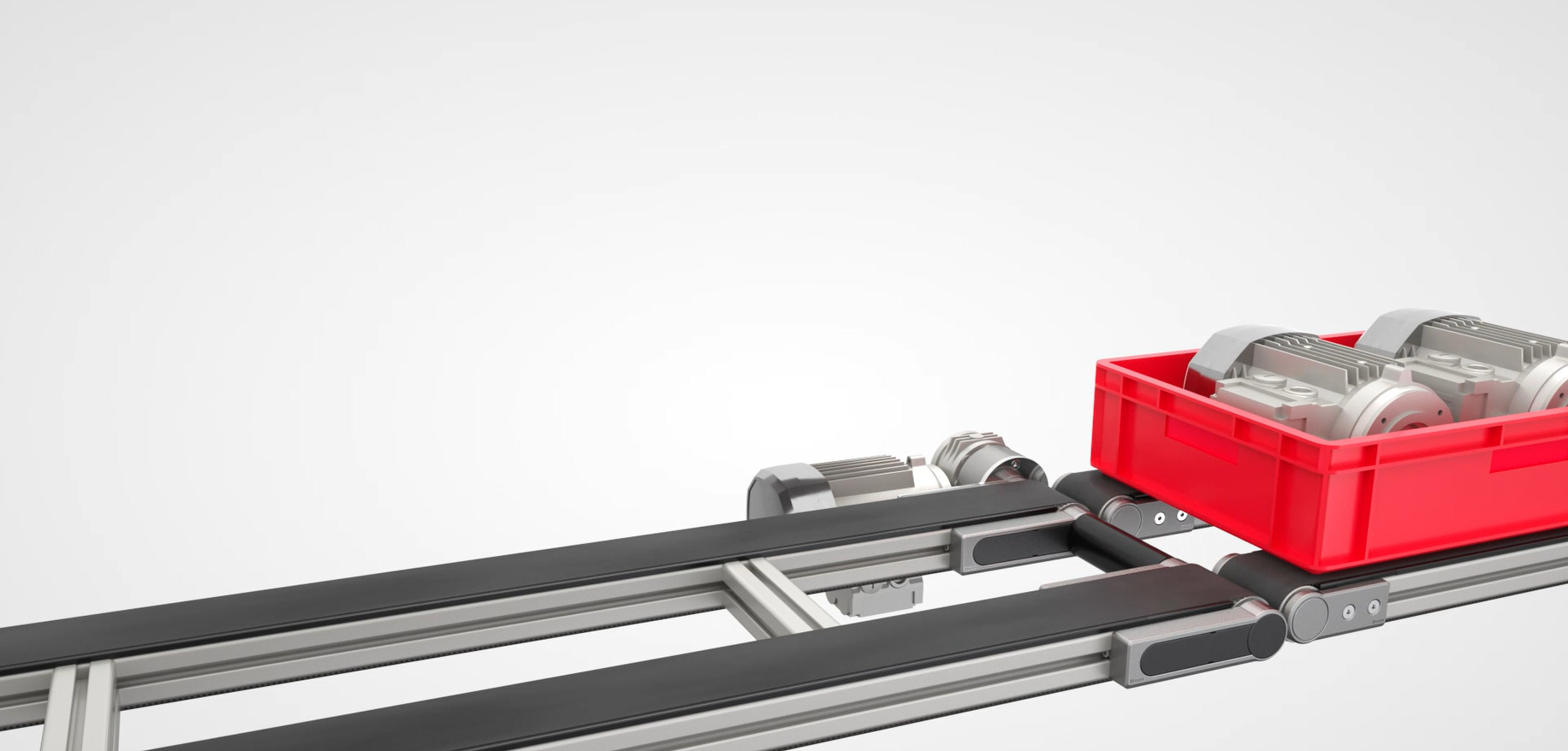
- Doppelzahnriemenförderer: Für besonders breite oder schwere Transportgüter wird häufig der Doppelzahnriemenförderer eingesetzt. Er basiert auf dem gleichen Prinzip wie der Zahnriemenförderer, verfügt jedoch über zwei synchron laufende Zahnriemen.
Wie ist ein Förderband aufgebaut?
Ein Förderband besteht aus mehreren Komponenten, die eng zusammenspielen: einem Rahmen als Traggerüst, Antriebs- und Umlenkrollen, einer Bandunterstützung und einem endlos flexiblen Gurt sowie einem Antriebssatz.
- Traggerüst: Bei dem Traggerüst handelt es sich um einen Rahmen bzw. ein Grundgestell, das in der Regel aus Stahl oder Aluminiumprofilen besteht. Das Gestell verbindet die beiden Umlenkungen und das Gleitblech.
- Umlenkungen: An beiden Enden des Traggerüsts befindet sich je eine Umlenkung. Die eine läuft über die Antriebsrolle, die die Motorkraft auf das Band überträgt. Die Umlenkrolle am gegenüberliegenden Ende lenkt das Band um und hält es auf Spannung.
- Gleitblech: Das Gleitblech besteht in der Regel aus Edelstahl und liegt auf dem Traggerüst auf. Es dient als Transportbandauflage und nimmt die Belastung des Transportguts auf, sodass das Band unter dem Gewicht nicht durchhängen kann.
- Transportband: Das Transportband wird zwischen den beiden Umlenkungen gespannt und befördert das Transportgut.
- Antriebssatz: Der Antriebssatz besteht aus Motor, Getriebe und Motorbefestigungssatz. Er treibt die Antriebsrolle und damit das Transportband an.
Nach Bedarf können am Förderband zusätzlich Führungsschienen und Relingsysteme für die zuverlässige Seitenführung oder eine Steuerung mit Sensorik zur Regelung von Geschwindigkeit, Start/Stopp und Staufunktionen angebracht werden. Im kostenfreien Lernmodul der item Academy lernen Sie die Grundlagen der Bandfördertechnik im Detail kennen.
Welche Antriebsarten gibt es bei Förderbändern?
Förderbänder werden überwiegend mit elektrischen Motoren angetrieben. Die Antriebsarten werden grundsätzlich anhand von drei Kriterien unterschieden: der Art des Motors, der Antriebsanordnung, der Art der Kraftübertragung. Alle drei Faktoren beeinflussen Geschwindigkeit, Effizienz und Flexibilität der gesamten Lösung.
Art des Motors
Die gebräuchlichste Lösung bei Förderbändern in der Industrie ist der Elektromotor mit integriertem Getriebe. Hier bilden Motor und Getriebe eine kompakte Einheit und erreichen in der Regel den Wirkungsgrad IE3. Für mehr Flexibilität bietet sich hingegen der Elektromotor mit separatem Getriebe an. Da Motor und Getriebe getrennte Einheiten sind, lässt sich dieser Antrieb einfach auf unterschiedliche Geschwindigkeiten umrüsten. Dafür muss lediglich das Getriebe ausgetauscht werden.
Antriebsanordnung
Die Antriebsanordnung beschreibt die Montageart und die Position des Antriebs und des Motors. Die räumlichen Möglichkeiten und der Anwendungszweck bestimmen dabei diese Position. Grundsätzlich gibt es drei Möglichkeiten, ein Förderband anzutreiben:
Art des Motors
Die gebräuchlichste Lösung bei Förderbändern in der Industrie ist der Elektromotor mit integriertem Getriebe. Hier bilden Motor und Getriebe eine kompakte Einheit und erreichen in der Regel den Wirkungsgrad IE3. Für mehr Flexibilität bietet sich hingegen der Elektromotor mit separatem Getriebe an. Da Motor und Getriebe getrennte Einheiten sind, lässt sich dieser Antrieb einfach auf unterschiedliche Geschwindigkeiten umrüsten. Dafür muss lediglich das Getriebe ausgetauscht werden.
Antriebsanordnung
Die Antriebsanordnung beschreibt die Montageart und die Position des Antriebs und des Motors. Die räumlichen Möglichkeiten und der Anwendungszweck bestimmen dabei diese Position. Grundsätzlich gibt es drei Möglichkeiten, ein Förderband anzutreiben:
- Direktantrieb: Hier sitzt der Antrieb am Kopfende des Förderbands – dort, wo das Transportgut das Band verlässt. Der Motor ist direkt mit der Antriebsrolle verbunden, sodass ein ruhiger, stabiler Lauf möglich ist. Diese Antriebsart bietet sich für die ziehende Laufrichtung an.
- Unterkopfantrieb: Auch dieser Antrieb ist am Kopfende positioniert, mit dem Unterschied, dass er unter dem Band platziert wird. Das Getriebe, also der Riemen oder Zahnriemen, ist an die angetriebene Umlenkung angeschlossen. Dieser Antrieb ermöglicht eine kompakte Anwendung und eignet sich für die ziehende Laufrichtung.
- Mittenantrieb: Dieser Antrieb ist unterhalb des Förderbands angebracht. Er eignet sich besonders gut für lange Förderstrecken oder bei besonderen konstruktiven Anforderungen, wenn eine Positionierung am Kopfende nicht möglich ist.
- Heckantrieb: Hier wird das Band geschoben. Dieser Antrieb wird häufig bei kürzeren Fördstrecken eingesetzt.
Kraftübertragung
- Reibschlussantrieb: Das ist die Standard-Antriebsart für Gurtförderer. Hier wird die Bewegung durch die Reibung zwischen der Antriebsrolle und der Unterseite des Bands übertragen.
- Zahnradantrieb: Hier greift ein formschlüssiger Zahnriemen in das Zahnrad. Das macht ein Verrutschen des Bands unmöglich.
Welche Förderbänder bietet item an?
Mit dem item Förderbandsystem bietet item einen Baukasten für individuelle Förderbänder an. Bestandteil des Produktportfolios sind vier verschiedene Förderbandtypen mit und ohne Staufähigkeit – von Gurtförderern bis zu Doppelzahnriemenförderern. Bei den Antrieben können Sie zwischen mehreren Motor-Getriebe-Kombinationen wählen. Ergänzt wird das System durch vielfältiges Zubehör wie Relingsystemen zur Seitenführung, Bandunterstützungen und modularen Ständern. Für die Planung steht Ihnen das kostenfreie item Engineeringtool zur Verfügung.
-
Beispielsätze:
- Ein Förderband automatisiert den Materialfluss und befördert Stückgut zuverlässig von A nach B.
- Mit einem Förderband werden Stückgüter in verschiedensten Bereichen der Industrie kontinuierlich transportiert.
- Ein Gurtförderer transportiert Stückgüter mit unebener Auflagefläche zuverlässig.

belt conveyor
Description:
Guide rails and railing systems to ensure reliable guidance at the sides can be added to the conveyor belt as required, as can a control system with sensor technology to control speed, start/stop and accumulating functions. Learn all about the basics of belt conveyor technology in materials handling in the free learning module in the item Academy.
Power transmission:
Definition
What is a conveyor belt?
A conveyor belt is a permanently installed, continuously moving conveying system for transporting goods, materials and products. It consists of a belt that is looped around pulleys and driven by a motor. Since the belt runs in a loop and without interruption, the system is categorised as a continuous conveyor.
The main task of a conveyor belt is to make processes more efficient by automating the flow of materials. Amongst other things, belt conveyor systems are a permanent feature of modern industry. They are used in applications such as logistics, intralogistics and production in all kinds of sectors.
The main task of a conveyor belt is to make processes more efficient by automating the flow of materials. Amongst other things, belt conveyor systems are a permanent feature of modern industry. They are used in applications such as logistics, intralogistics and production in all kinds of sectors.
Good to know
How does a conveyor belt work?
The way a conveyor belt works follows a basic principle. An endless belt is looped around drive and return pulleys, which apply tension to the belt (made from a durable material such as rubber or PVC), while an electric motor drives the movement of the belt. A belt conveyor is normally driven by an electric motor with an integrated gearbox. A choice of gear ratios means conveyor belt systems can operate at different speeds. Depending on the belt surface, objects that are placed on the belt can be transported with or without accumulation. A conveyor belt is classed as non-accumulating when products come to a stop on the moving belt without the belt itself having to be stopped.
Types of conveyor belts – what are the options?
Alongside other material handling systems, such as chain conveyor, roller conveyor and roller track conveying systems, there are four standard industrial conveyor belt types. The right solution depends on the goods being transported, specific requirements and the area of use:
- Flat belt conveyor: This conveyor belt type has a continuous flat belt and is particularly suitable for individual goods with uneven contours. The belt is driven by a friction-based connection (static friction) between the drive pulley and the belt. Flat belt conveyors are ideal for tasks such as removing production goods, sorting and separating parts and lightweight objects, and interlinking multiple production facilities.
- Double flat belt conveyor: This conveyor is similar in structure to a flat belt conveyor but has two parallel belts. Double flat belt conveyors are mostly used to transport wider and inherently stable products.
- Timing belt conveyor: In this case, a mechanically locking timing belt is used instead of a flat belt. Its movement is the result of a mechanically locked connection (the intermeshing of teeth) between the gearwheel and the timing belt. This conveyor belt is suitable for transporting heavy loads.
- Double timing belt conveyor: This type of conveyor is often used for exceptionally wide or heavy objects. It is based on the same material handling principle as a timing belt conveyor but has two timing belts running in sync.
How is a conveyor belt constructed?
A conveyor belt is made up of several components that interact closely – a frame acting as a supporting structure, drive and return pulleys, a belt support, a flexible, continuous belt and a drive set.
- Supporting structure: The supporting structure is a (base) frame that is normally made of steel or aluminium. This frame connects the two reverse units and the glide plate.
- Reverse units: A reverse unit is located at each end of the supporting structure. One of these incorporates the drive pulley, which transmits the power of the motor to the belt, while the reverse unit at the opposite end loops back the belt and keeps it tensioned.
- Glide plate: The glide plate is normally made of stainless steel and sits on the supporting structure. It is used to support the conveyor belt and bears the load of the transported goods so the belt doesn’t sag under their weight.
- Conveyor belt: The conveyor belt is tensioned between the two reverse units and conveys the goods that need to be transported.
- Drive set: Consisting of a motor, a gearbox and a motor fastening set, the drive set powers the drive pulley and the conveyor belt along with it.
Guide rails and railing systems to ensure reliable guidance at the sides can be added to the conveyor belt as required, as can a control system with sensor technology to control speed, start/stop and accumulating functions. Learn all about the basics of belt conveyor technology in materials handling in the free learning module in the item Academy.
What are the different drive types for conveyor belts?
Conveyor belts are mainly driven by electric motors. Drive types basically differ in three key ways – the type of motor they use, their drive arrangement and the type of power transmission they involve. All three factors influence the overall solution’s speed, efficiency and flexibility.
Type of motor:
The solution most commonly used for industrial conveyor belts is an electric motor with an integrated gearbox. The motor and gearbox form a compact unit and normally achieve an efficiency rating of IE3. For greater flexibility, the electric motor can have a separate gearbox. The fact that the motor and gearbox are then separate units means this drive can easily be modified to operate at different speeds simply by swapping the gearbox.
Drive arrangement:
The drive arrangement refers to the mounting type and position of the drive and motor. The position is determined by the available space and the intended application. Basically speaking, there are four conveyor belt drive options:
Type of motor:
The solution most commonly used for industrial conveyor belts is an electric motor with an integrated gearbox. The motor and gearbox form a compact unit and normally achieve an efficiency rating of IE3. For greater flexibility, the electric motor can have a separate gearbox. The fact that the motor and gearbox are then separate units means this drive can easily be modified to operate at different speeds simply by swapping the gearbox.
Drive arrangement:
The drive arrangement refers to the mounting type and position of the drive and motor. The position is determined by the available space and the intended application. Basically speaking, there are four conveyor belt drive options:
- Direct drive: With this option, the drive is located at the head of the conveyor belt, where the goods that are being conveyed leave the belt. The motor is connected directly to the drive pulley, which enables smooth and stable running. This type of drive is suitable for an arrangement where the direction of travel is such that the drive is pulling goods to the end of the belt.
- Head drive: This drive, too, is located at the head of the conveyor belt, but it is positioned below the belt. The gearbox, and thus the (timing) belt, is connected to the driven reverse unit. This drive is ideal for compact applications and is suitable for an arrangement where the direction of travel is such that the drive is pulling goods to the end of the belt.
- Centre drive: This drive is fitted underneath the conveyor belt. It is particularly suitable for long conveyor sections and specific design requirements, when positioning the drive at the head of the conveyor belt is impossible.
- Rear drive: In this case, the belt is pushed. This type of drive is frequently used for shorter conveyor sections.
Power transmission:
- Friction-based drive: This is the standard drive type for belt conveyors. In this case, the motive power is transmitted through the friction between the drive pulley and the underside of the belt.
- Timing belt drive: With this type of drive, a toothed timing belt mechanically interlocks with the gearwheel, which makes it impossible for the belt to slip.
What conveyor belts does item offer?
The item Conveyor Belt System is a modular system for bespoke conveyor belts. The product portfolio consists of four different conveyor belt types, with and without suitability for accumulation – from Flat Belt Conveyors to Double Timing Belt Conveyors. When it come to the drives, you can choose from a number of different motor and gearbox combinations. The system is complemented by a wide range of accessories, such as railing systems to provide guidance at the sides and modular stands. You can use the free item Engineeringtool for planning purposes.
-
Example sentences:
- A belt conveyor reliably transports individual goods that have uneven contours.
conveyor belt
-
Example sentences:
- A conveyor belt automates the material flow and reliably transports individual goods from A to B.
- Also a conveyor belt transports individual goods continuously in all kinds of industrial applications.

Cinta transportadora
Description:
A la cinta transportadora se le pueden añadir perfiles guía y sistemas de barandillas para asegurar un guiado fiable en los lados, así como un sistema de control con tecnología de sensores para regular la velocidad y las funciones de arranque/parada y de acumulación. Aprenda todos los conceptos básicos sobre la tecnología de cintas transportadoras para la manipulación de materiales en el módulo de aprendizaje gratuito de la item Academy.
Transmisión de la potencia:
Definición
¿Qué es una cinta transportadora?
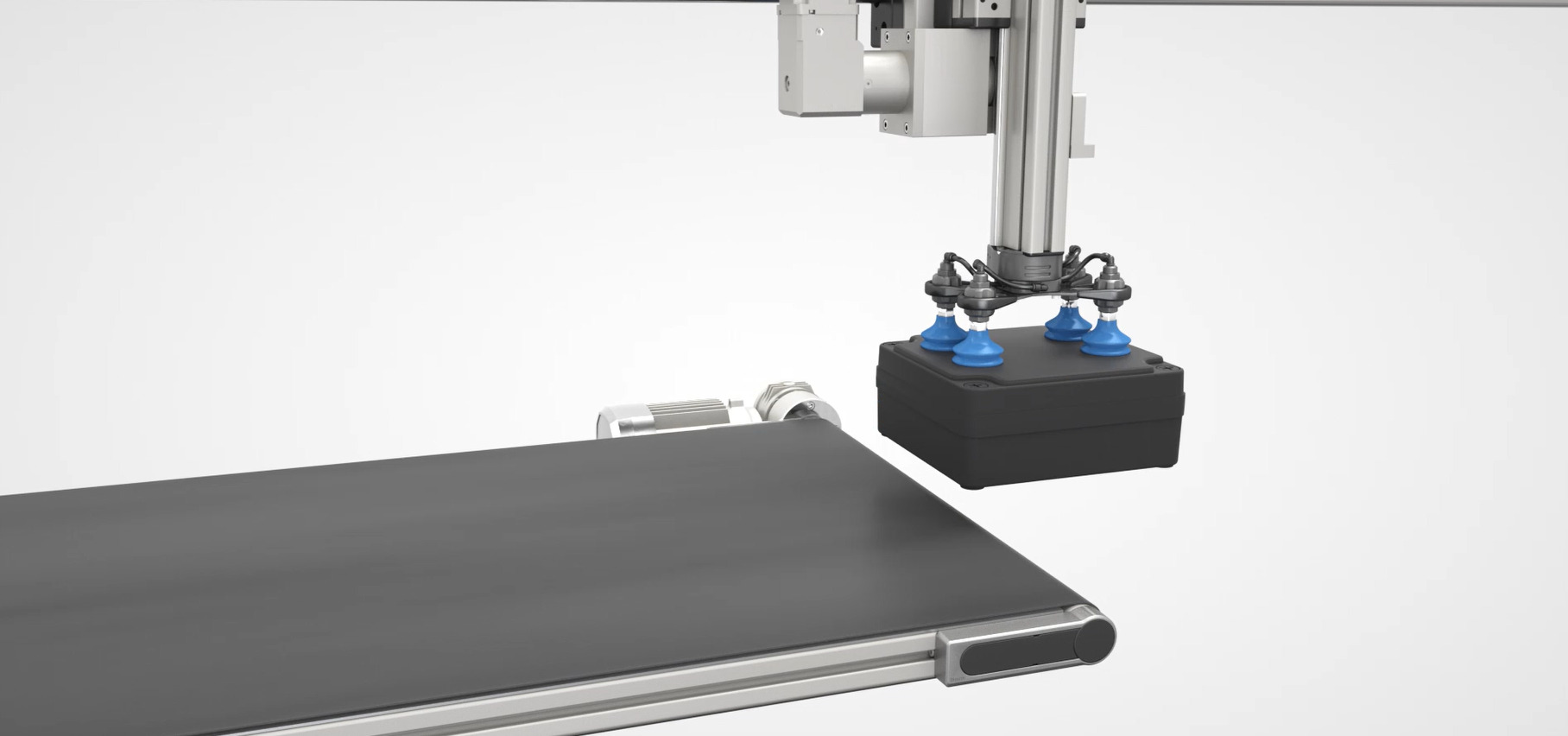
Una cinta transportadora es un sistema de transporte instalado de forma permanente y en movimiento continuo que permite trasladar mercancías, materiales y productos de un punto a otro. Consta de una banda enrollada alrededor de un sistema de tambores accionados por un motor. Como la banda circula en bucle y sin interrupción, el sistema se define como un transportador continuo.
La principal función de una cinta transportadora es mejorar la eficiencia de los procesos mediante la automatización del flujo de materiales. Entre otras cosas, los sistemas transportadores de banda son una instalación permanente en la industria moderna. Se utilizan en aplicaciones como la logística, la intralogística y la producción en sectores de todo tipo.
La principal función de una cinta transportadora es mejorar la eficiencia de los procesos mediante la automatización del flujo de materiales. Entre otras cosas, los sistemas transportadores de banda son una instalación permanente en la industria moderna. Se utilizan en aplicaciones como la logística, la intralogística y la producción en sectores de todo tipo.
Es bueno saber
¿Cómo funciona una cinta transportadora?
El funcionamiento de una cinta transportadora sigue un principio básico. Se trata de una cinta sinfín enrollada alrededor de un tambor motriz y otro de retorno que aplican tensión sobre la cinta (fabricada con un material duradero como caucho o PVC) y un motor eléctrico que impulsa el movimiento de la cinta. Normalmente, un transportador de banda es accionado por un motor eléctrico con un reductor integrado. La disponibilidad de distintas ratios de transmisión permite que los sistemas de cintas transportadoras funcionen a diferentes velocidades. Según la superficie de la cinta, los objetos colocados sobre ella pueden transportarse con o sin acumulación. Se dice que una cinta transportadora es de no acumulación, cuando los productos llegan a un punto de parada sobre la cinta en movimiento sin que la propia cinta tenga que detenerse.
Tipos de cintas transportadoras: ¿qué opciones hay?
Además de otros sistemas de manipulación de materiales, como los transportadores de cadena, los transportadores de rodillos y los sistemas de transporte por guías de inserción de roldanas, existen cuatro tipos estándar de cintas transportadoras industriales. La solución correcta depende de los artículos que se han de transportar, las necesidades específicas y la zona donde se va a utilizar:
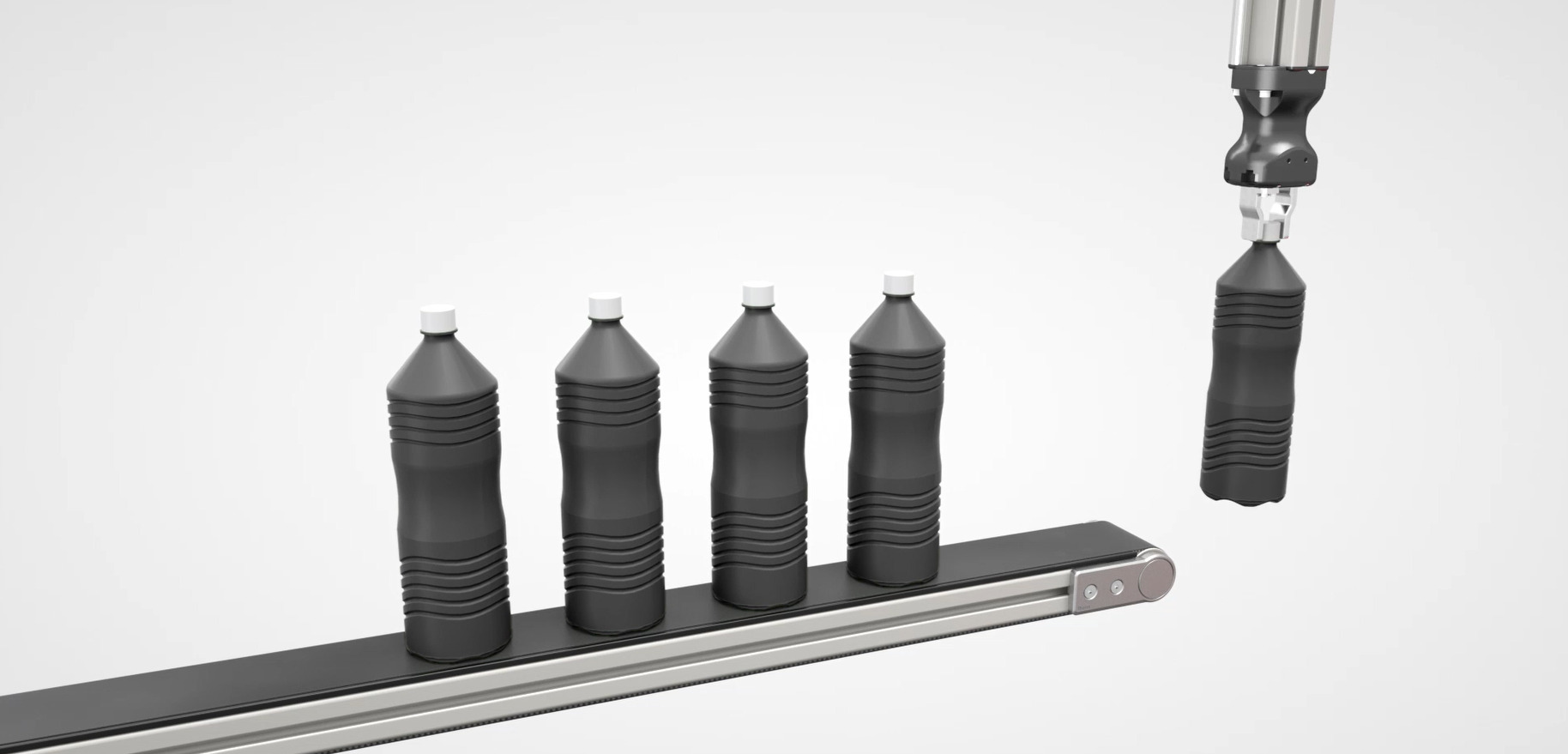
- Transportador de cinta plana: Este tipo de cinta transportadora está formado por una cinta plana continua y está especialmente indicado para artículos individuales con contornos irregulares. La cinta es arrastrada por fricción (fricción estática) entre el tambor motriz y la propia cinta. Los transportadores de cinta plana están especialmente indicados para trabajos como la retirada de artículos de fabricación, la selección y separación de piezas y objetos de poco peso, y la conexión de distintas instalaciones de producción.
- Transportador de cinta plana doble: Este transportador tiene una estructura similar al de cinta plana pero con dos cintas paralelas. Los transportadores de cinta plana doble se utilizan principalmente para transportar productos más grandes y estables.
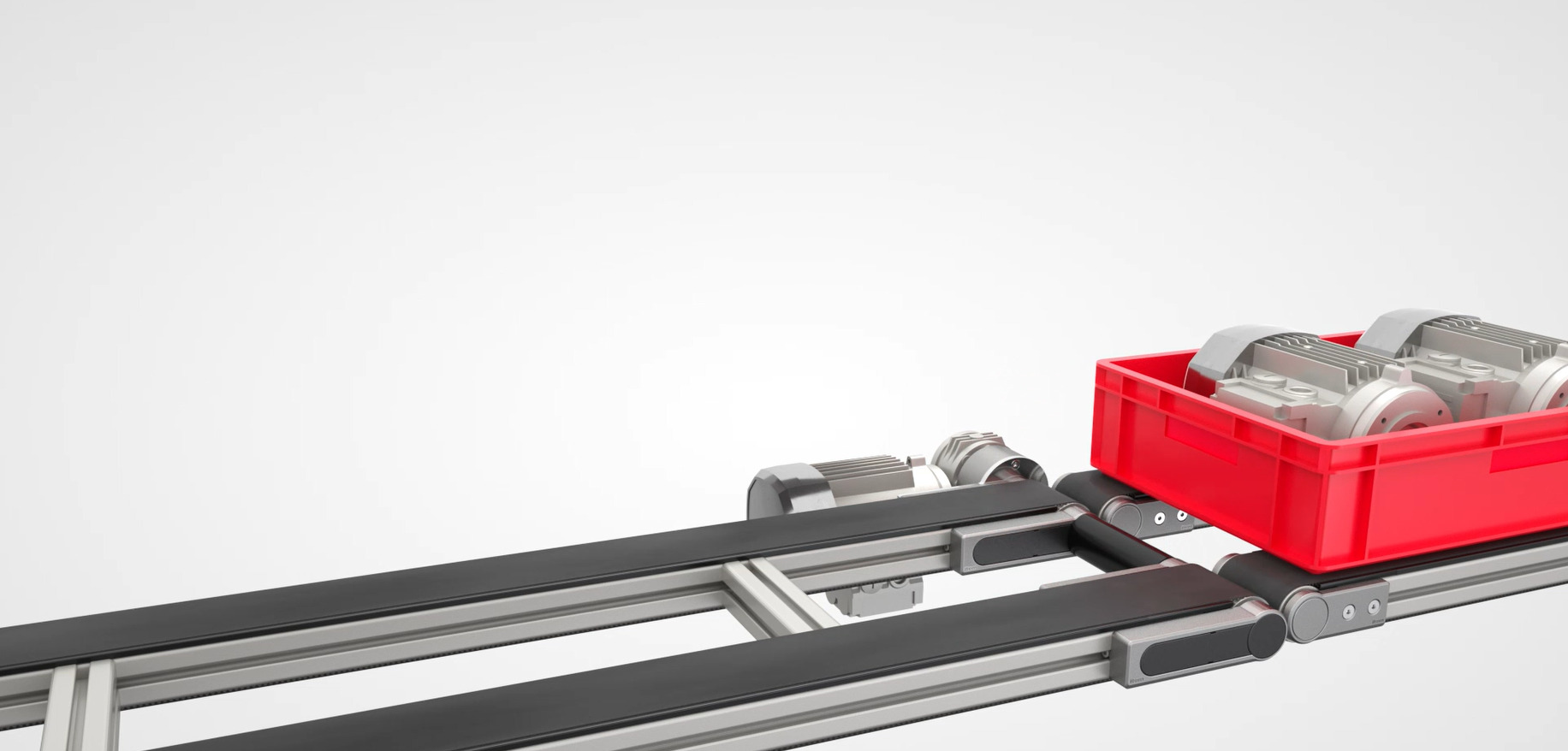
- Transportador de correa dentada: En este caso, se utiliza una correa dentada con enclave mecánico en lugar de una cinta plana. Su movimiento es el resultado de una conexión de enclavamiento mecánico (el engranaje de los dientes) entre la rueda del engranaje y la correa dentada. Esta cinta transportadora está indicada para el transporte de cargas pesadas.
- Transportadores de correa dentada doble: Este tipo de transportador se suele utilizar para objetos excepcionalmente grandes y pesados. El principio de manipulación de materiales es el mismo que el de un transportador de correa dentada, pero con dos correas que funcionan sincronizadas.
¿Cómo se construye una cinta transportadora?
Un cinta transportadora está formada por varios elementos que interactúan estrechamente: un bastidor que actúa como estructura de soporte, los tambores motriz y de retorno, un soporte para la cinta, una cinta flexible y continua, y un motor de accionamiento.
- Estructura de soporte: La estructura de soporte es una armazón (base) normalmente de acero o aluminio. Este armazón conecta los dos tambores de reenvío con la placa deslizante.
- Tambores de reenvío: Hay un tambor de reenvío en cada extremo de la estructura de soporte. Uno de ellos es el tambor motriz, que transmite la potencia del motor a la cinta, mientras que el tambor de reenvío del lado opuesto devuelve la cinta y mantiene la tensión.
- Placa deslizante: La placa deslizante se fabrica normalmente en acero inoxidable y descansa sobre la estructura de soporte. Se utiliza como apoyo para la cinta transportadora y soporta el peso de los materiales transportados para que la cinta no se hunda.
- Cinta transportadora: La cinta transportada se mantiene tensa entre los dos tambores de reenvío y desplaza los artículos que se necesita transportar.
- Grupo de accionamiento: Consta de un motor, un reductor y un conjunto de fijación del motor; el grupo de accionamiento transmite potencia al tambor motriz y este, a su vez, a la cinta transportadora.
A la cinta transportadora se le pueden añadir perfiles guía y sistemas de barandillas para asegurar un guiado fiable en los lados, así como un sistema de control con tecnología de sensores para regular la velocidad y las funciones de arranque/parada y de acumulación. Aprenda todos los conceptos básicos sobre la tecnología de cintas transportadoras para la manipulación de materiales en el módulo de aprendizaje gratuito de la item Academy.
¿Cuáles son los distintos tipos de accionamiento de las cintas transportadoras?
En general, las cintas transportadoras están accionadas por motores eléctricos. Los tipos de accionamiento se diferencian básicamente en tres aspectos principales: el tipo de motor que utilizan, la configuración del accionamiento y el tipo de transmisión de potencia utilizado. Los tres factores influyen en la velocidad, la eficiencia y la flexibilidad de la solución en su conjunto.
Tipo de motor:
La solución más utilizada en las cintas transportadoras industriales es un motor eléctrico con un reductor integrado. El motor y el reductor forman una unidad compacta y normalmente alcanzan una eficiencia IE3. Para conseguir una mayor flexibilidad, el motor eléctrico puede incorporar un reductor independiente. El hecho de que el motor y el reductor sean unidades separadas permite modificar fácilmente el accionamiento para funcionar a distintas velocidades con solo sustituir el reductor.
Disposición del accionamiento:
La disposición del accionamiento hace referencia al tipo de montaje y a la posición del accionamiento y el motor. La posición viene determinada por el espacio disponible y el uso previsto. Básicamente, existen cuatro opciones de accionamiento para cintas transportadoras:
Tipo de motor:
La solución más utilizada en las cintas transportadoras industriales es un motor eléctrico con un reductor integrado. El motor y el reductor forman una unidad compacta y normalmente alcanzan una eficiencia IE3. Para conseguir una mayor flexibilidad, el motor eléctrico puede incorporar un reductor independiente. El hecho de que el motor y el reductor sean unidades separadas permite modificar fácilmente el accionamiento para funcionar a distintas velocidades con solo sustituir el reductor.
Disposición del accionamiento:
La disposición del accionamiento hace referencia al tipo de montaje y a la posición del accionamiento y el motor. La posición viene determinada por el espacio disponible y el uso previsto. Básicamente, existen cuatro opciones de accionamiento para cintas transportadoras:
- Accionamiento directo: Con esta opción, el accionamiento se sitúa en la cabeza de la cinta transportadora, donde los productos transportados abandonan la cinta. El motor está conectado directamente al tambor motriz, lo que permite un funcionamiento suave y estable. Este tipo de accionamiento es adecuado para una disposición en la que el sentido de avance implica que el accionamiento “tira” de los productos hasta el final de la cinta.
- Accionamiento de cabecera: Este accionamiento también está situado a la cabeza de la cinta transportadora, pero debajo de la cinta. El reductor, y por lo tanto la correa (dentada), están conectados al tambor de reenvío. Este tipo de accionamiento es ideal para aplicaciones compactas y está indicado para una disposición en la que el sentido de avance implica que el accionamiento “tira” de los productos hasta el final de la cinta.
- Accionamiento central: Este accionamiento está instalado debajo de la cinta transportadora. Es especialmente indicado para tramos largos de cinta y requisitos de diseño específicos, cuando no es posible colocar el accionamiento a la cabeza de la cinta transportadora.
- Accionamiento posterior: En este caso, el accionamiento "empuja" la cinta. Este tipo de accionamiento se suele utilizar en tramos de cinta cortos.
Transmisión de la potencia:
- Accionamiento por fricción: Este es el tipo de accionamiento estándar de las cintas transportadoras. En este caso, la potencia motriz se transmite mediante la fricción entre el tambor motriz y la cara inferior de la cinta.
- Accionamiento por correa dentada: Con este tipo de accionamiento, una correa dentada se enclava mecánicamente con la rueda del engranaje, lo que impide que la cinta patine.
¿Qué tipos de cintas transportadoras ofrece item?
El sistema de cintas transportadoras de item es un sistema modular para cintas transportadoras a medida. La cartera de productos incluye cuatro tipos distintos de cintas transportadoras, con y sin acumulación: desde transportadores de cinta plana hasta transportadores de correa dentada doble. En cuanto a los accionamientos, se puede elegir entre diversas combinaciones de motor y reductor. El sistema se complementa con una amplia gama de accesorios, como sistemas de guiado lateral y soportes modulares. Si lo desea, puede utilizar la herramienta de diseño gratuita de item para su planificación.
-
Ejemplos de uso:
- Una cinta transportadora automatiza el flujo de materiales y transporta productos de un punto A a un punto B de forma fiable.
- Una cinta transportadora desplaza de forma fiable productos con contornos irregulares.
cintas transportadoras
-
Ejemplos de uso:
- Las cintas transportadoras trasladan productos de manera continua en todo tipo de aplicaciones industriales.

传送带