
Gang (z.B. Frequenz)

gear
Description:
A gear is a machine element that is usually used as an interlocking, non-slip means of transmitting forces between shafts that are not in line with each other. It is common for this transmission to take place between two rotating motions or between one rotating and one linear motion. The circumference of the gear is covered in evenly spaced teeth (number of teeth, pitch), the dimensions of which are determined by their width and depth. The teeth each have a right and left flank that are referred to as the load flank or non-working flank, depending on the direction of Rotation. The load flanks of two interlocking gears touch each other at the point of contact, which migrates along the line of contact during a revolution. Backlash and clearance occur at the non-working flank and at the addendum circle of the mating gear. The outer circumference of the gear, as measured over the tips of the teeth, is referred to as the addendum circle. The base circle is located at the fillet of the teeth. The pitch circle is located between the addendum circle and base circle. The internal cylinder is known as the pitch cylinder. A distinction is made between external and internal gears, various types of flank shape and the following basic designs: Spur gear (cylindrical gear) Rack Elliptical gear Bevel gear Crown gear Worm gear Gears are the components used to build a gear train. Only gears with the same module can be combined to form a gear pair.
-
Example sentences:
- A distinction is made between rail-mounted and railless running gear.
- These system elements simplify the use of Bevel Gear Boxes.
- This Bevel Gearbox can be used to produce a whole range of variants.
operation
Description:
It is not intended for continuous lifting operations in automated industrial processes. Long 'cycle times', removal operations can be interrupted, restricted space Auxiliary tools are also required occasionally in packaging operations.
-
Example sentences:
- It is not intended for continuous lifting operations in automated industrial processes.
- Long 'cycle times', removal operations can be interrupted, restricted space Auxiliary tools are also required occasionally in packaging operations.
response
Description:
A number of controllers are available to optimise the control response. A step response is a system's response to a step function. An I element's step response is a straight line that rises over time with the slope .
-
Example sentences:
- A number of controllers are available to optimise the control response.
- A step response is a system's response to a step function.
- An I element's step response is a straight line that rises over time with the slope .
speed
Description:
They can travel at speeds of up to six kilometres per hour. That helps to speed up the design process for a work bench system considerably. Brake rollers can be used to limit the speed of descent.
-
Example sentences:
- They can travel at speeds of up to six kilometres per hour.
- That helps to speed up the design process for a work bench system considerably.
- Brake rollers can be used to limit the speed of descent.

engrane
Description:
Un engrane es un elemento de máquina que se usa usualmente como un medio de interbloqueo sin deslizamiento para la transmisión de fuerzas entre ejes que no están alineadas. Es común que esta transmisión se lleve a cabo entre dos movimientos rotativos o entre un movimiento rotativo y uno lineal. La circunferencia del engrane es cubierta por dientes uniformemente espaciados (número de dientes, módulo), las dimensiones de los cuales son determinadas por su ancho y profundidad. Cada diente tiene un flanco derecho e izquierdo que son referidos como el flanco de carga y el flanco sin carga, dependiendo de la dirección de rotación. Los flancos de carga de dos engranes interbloqueados se tocan entre sí en el punto de contacto, el cual migra a lo largo de la línea de contacto durante una revolución. El retroceso y el espaciamiento ocurren en el flanco sin trabajo y en el círculo de addendum en el engrane de acoplamiento. La circunferencia exterior del engrane, según sea medida sobre las puntas de los dientes, es referida como el círculo de addendum. El círculo base se ubica en el filete del diente. El círculo primitivo se ubica entre el círculo de addendum y el círculo base. El cilindro interno también se conoce como cilindro primitivo. Se debe distinguir entre los engranes exteriores e interiores, los diferentes tipos de formas de flancos y los siguientes diseños básicos: Engrane recto (engrane cilíndrico) Cremallera Engrane elíptico Engrane cónico Engrane de corona Engrane de tornillo Los engranes son componentes usados para construir un tren de engranaje. Solo los engranes con el mismo módulo se pueden combinar para formar un par de engranes.
operación
respuesta
velocidad
Description:
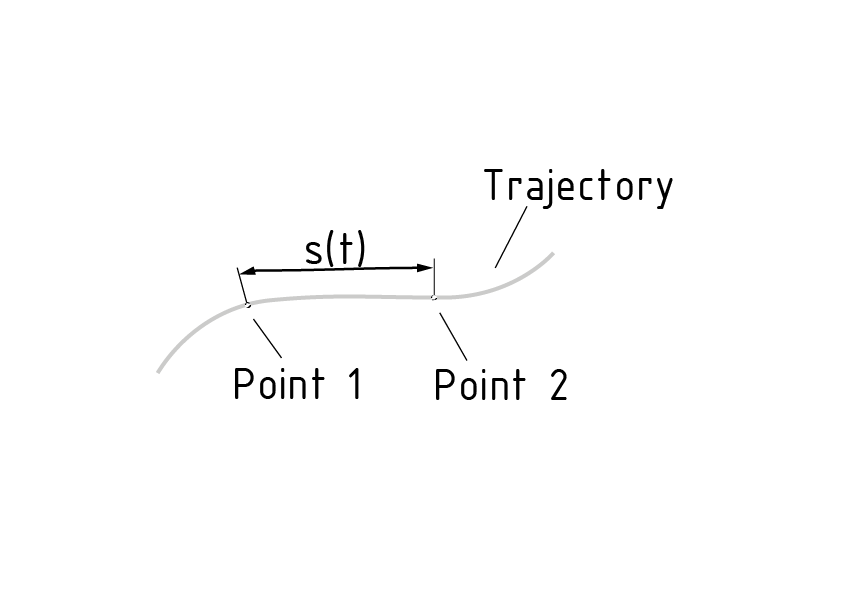
La velocidad v describe el cambio en la ruta s con el tiempo t. Se puede calcular matemáticamente derivando la ruta. La velocidad es una cantidad de vector y el vector de velocidad $\vec{v}$ indica la dirección y la magnitud de la velocidad. La unidad de velocidad según el en el sistema internacional es m/s (metros por segundo). Dependiendo de la aplicación relevante, las velocidades también se miden o se convierten a $km/h$ o número Mach, por ejemplo. Aplica lo siguiente: $1m/s\overset{\wedge}{=}3.6km/h$. El número Mach sin dimensiones se usa usualmente en aeronáutica y describe la velocidad en relación con la velocidad del sonido c. En el caso del movimiento uniforme, la velocidad es definida como el cociente de la ruta $s(t)$, desde el punto 1 al 2, con el tiempo t. En el caso de un movimiento no uniforme, este valor produce solo la velocidad media $\overrightarrow{v}=\frac{s(t)}{t}$. Velocidad media en el caso de un movimiento no uniforme

响应
操作
速度
Description:
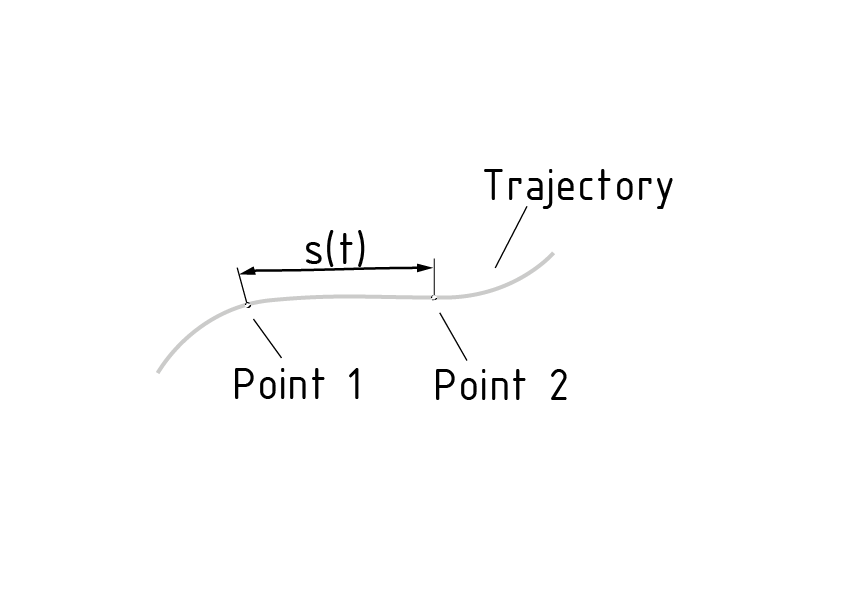
速度 v描述了位移s随时间t的变化情况。它可以通过对位移数学求导得到。速度是一个矢量 $\vec{v}$,它既描述了大小又描述了方向。 速度的国际单位是m/s(米每秒)。鉴于相关应用,速度也被会测量或转化成$km/h$或马赫数。例如如下转换: $1m/s\overset{\wedge}{=}3.6km/h$ 。无量纲的马赫数通常在航空领域应用,它用来描述物体速度与声速c之间的关系。 在匀速运动中,速度被定义为物体从点1到点2的位移 $s(t)$ 与时间t的商。在非匀速运动中,这个公式只能用来计算平均速度 $\overrightarrow{v}=\frac{s(t)}{t}$ 。 非匀速运动的平均速度