

Antrieb (Lineartechnik)
Beschreibung:
Definition
Was ist ein Linearantrieb?
Ein Linearantrieb ist ein mechanisches Element, welches zur Umwandlung von elektrischer Energie in eine geradlinige Bewegung entlang einer Achse genutzt wird. Er ist ein Teil der Lineartechnik.
Mit einem Linearantrieb wird meist die Drehbewegung eines Motors so umgewandelt, dass sich ein Schlitten geradlinig auf einer Führungsschiene bewegt. Ziel dabei ist, die Energie des Motors möglichst verlustfrei in eine solche lineare Bewegung zu bringen, während gleichzeitig auftretende Querkräfte aufgenommen werden.
Mit einem Linearantrieb wird meist die Drehbewegung eines Motors so umgewandelt, dass sich ein Schlitten geradlinig auf einer Führungsschiene bewegt. Ziel dabei ist, die Energie des Motors möglichst verlustfrei in eine solche lineare Bewegung zu bringen, während gleichzeitig auftretende Querkräfte aufgenommen werden.
Gut zu wissen
Aus welchen Komponenten setzt sich eine Antriebslösung zusammen?
Eine vollständige Antriebslösung setzt sich aus folgenden Komponenten zusammen:
- Motor: Der Motor wandelt elektrische Energie in mechanische Energie um. Jeder Motor hat ein Typenschild, auf dem Daten wie Drehmoment, Drehzahl und Wirkungsgrad angegeben sind.
- Getriebe: Das Getriebe passt die Drehzahl und das Drehmoment des Motors an die jeweilige Anwendung an.
- Gebersystem (konfigurationsabhängig): Gebersysteme sind Sensoren, die auf der Rotorwelle fest montiert sind. Sie geben stetig Informationen über die Rotorlage und die Geschwindigkeit der Rotorwelle an die Steuerung weiter.
- Steuerung: Die Steuerung erhält über ein Gebersystem fortlaufend Informationen über Rotorlage und Drehzahl des Motors. Sie gibt dem Motor schließlich vor, mit welcher Geschwindigkeit und Kraft der Antrieb betrieben werden soll.
- Kupplung: Die Kupplung verbindet die Antriebslösung mit der Linearachse, die angetrieben werden soll.
Die Grundlagen der Antriebstechnik lernen Sie im Detail im kostenfreien Lernmodul der item Academy kennen.
Was ist der Unterschied zwischen einem Linearantrieb und einem Linearmotor?
Ein Linearantrieb wandelt die Drehbewegung eines Motors in eine geradlinige Bewegung um, z. B. über einen Riemen oder eine Spindel. Dagegen erzeugt ein Linearmotor direkt eine lineare Bewegung, ohne den Umweg über eine Drehbewegung. Welche der beiden Lösung man auswählt, hängt von Anforderungen und Budget ab.
Welche Arten von Linearantrieben gibt es?
Es gibt mehrere Arten von Linearantrieben, die sich in Geschwindigkeit, Präzision, Kraft und Einsatzbereich unterscheiden:
- Zahnriemenantrieb: Bei einem Zahnriemenantrieb läuft ein Zahnriemen formschlüssig über eine motorisch angetriebene Riemenscheibe. Die Drehbewegung wird so schlupf- und verlustarm in eine Linearbewegung des Schlittens übertragen. Dieser Antrieb läuft leise und ermöglicht schnelle Richtungswechsel. Er eignet sich ideal für hohe Geschwindigkeiten und große Verfahrwege.
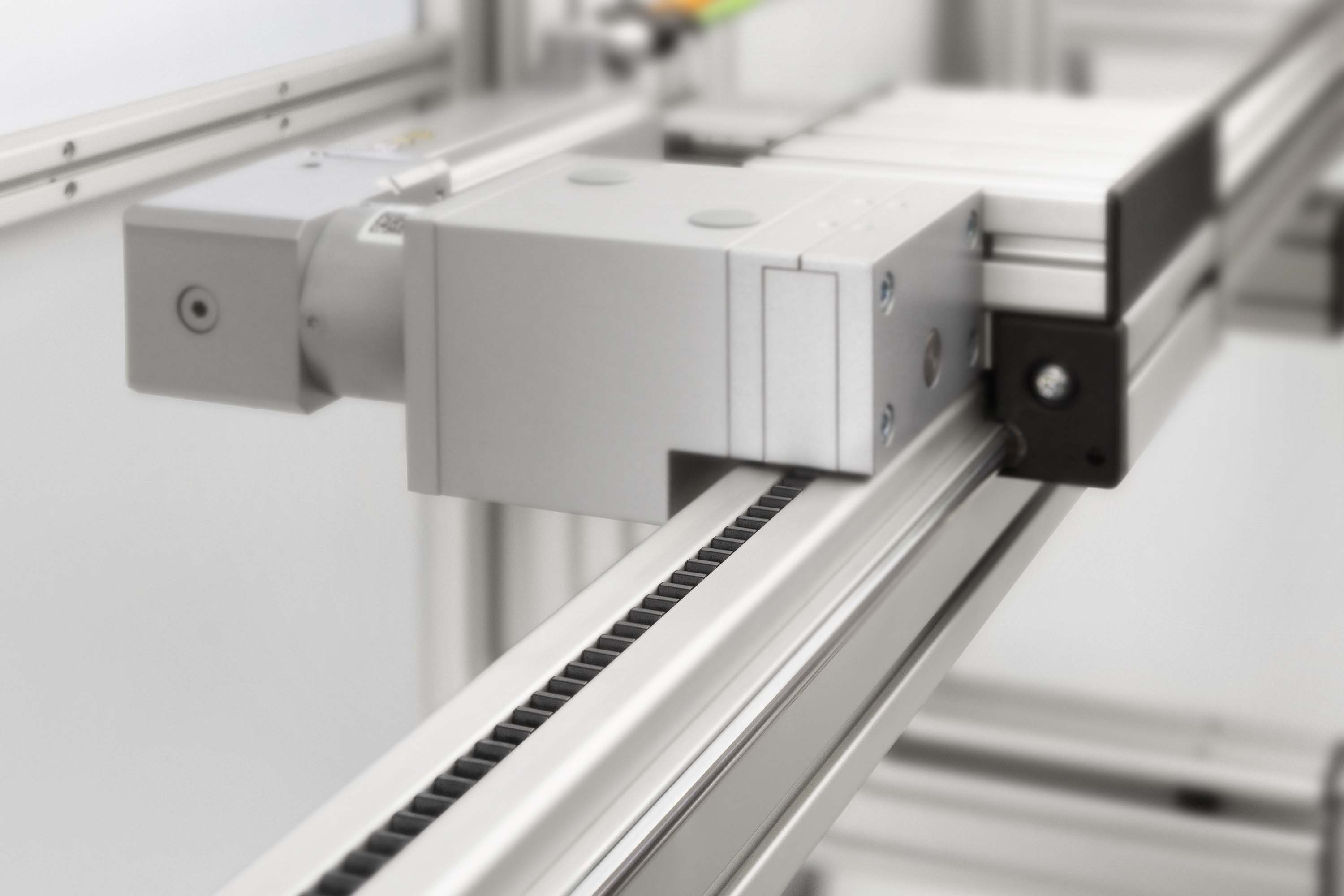
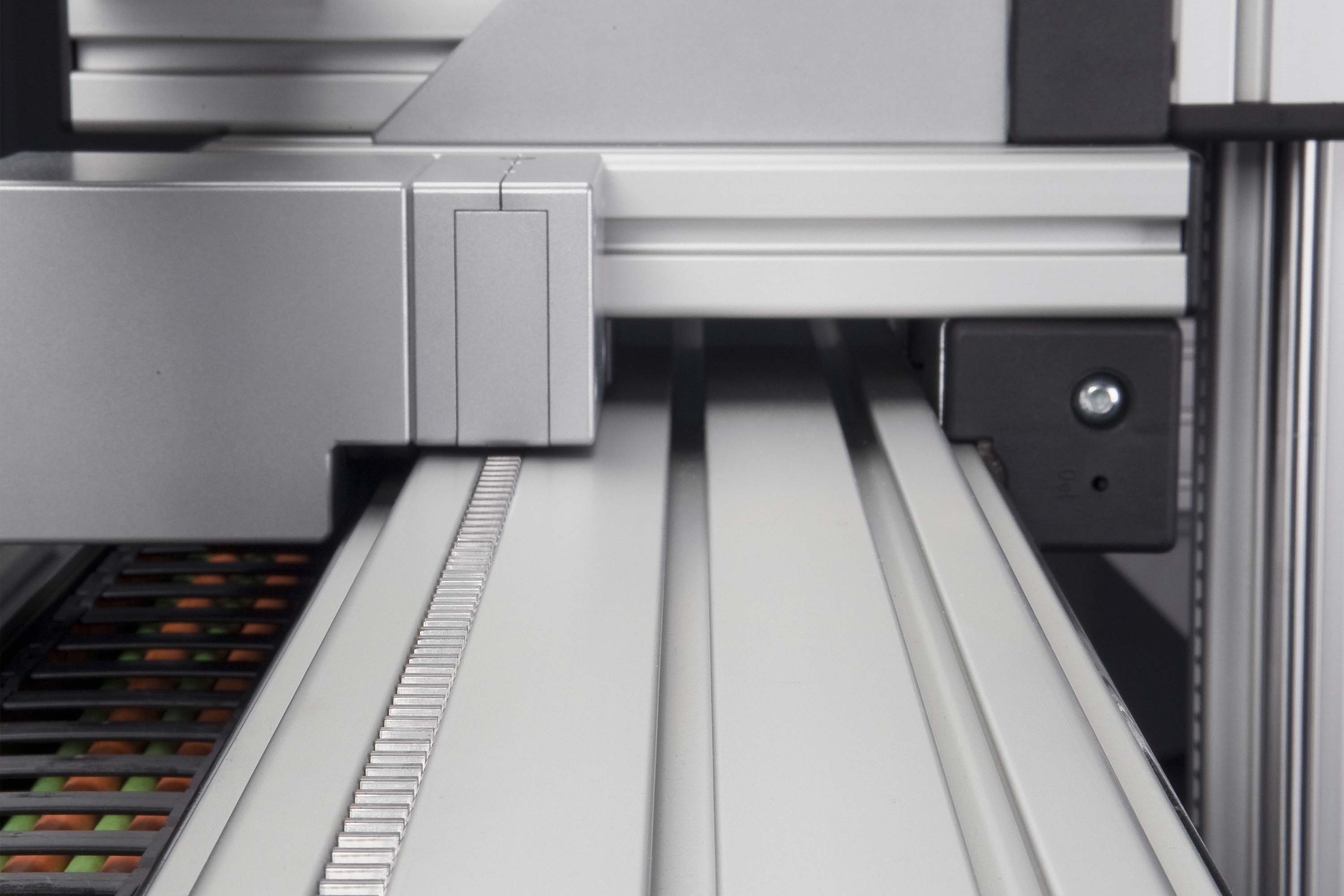
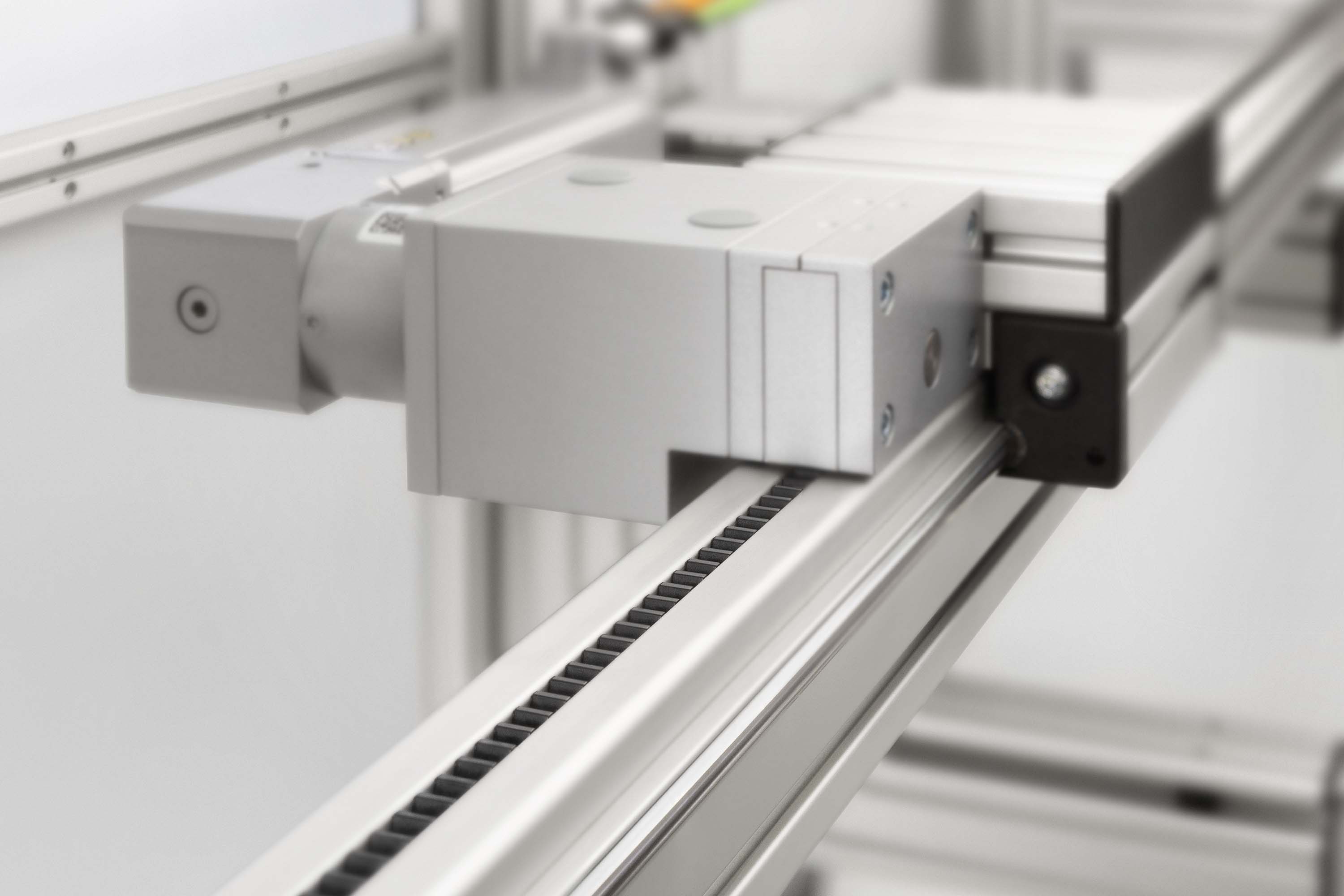
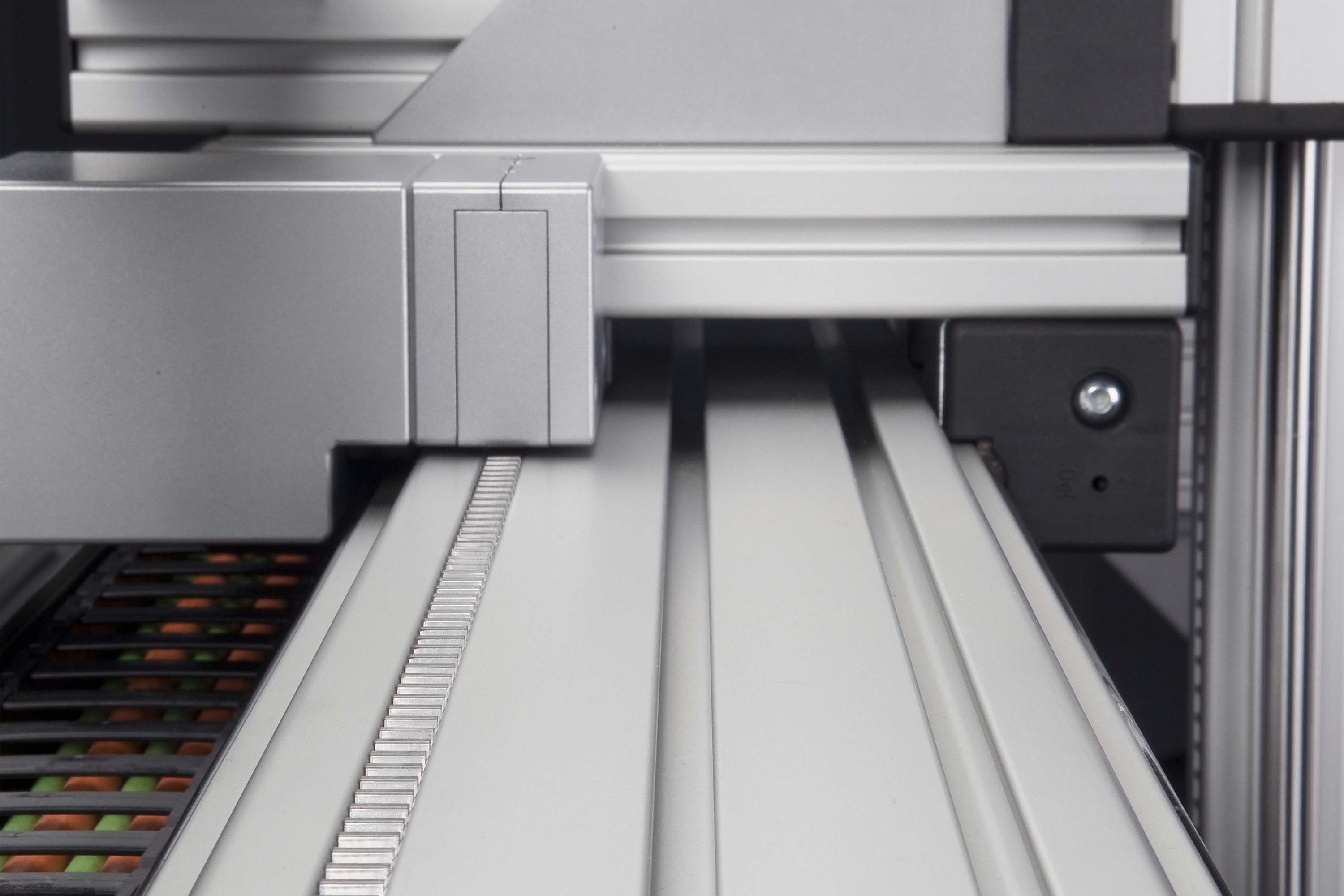
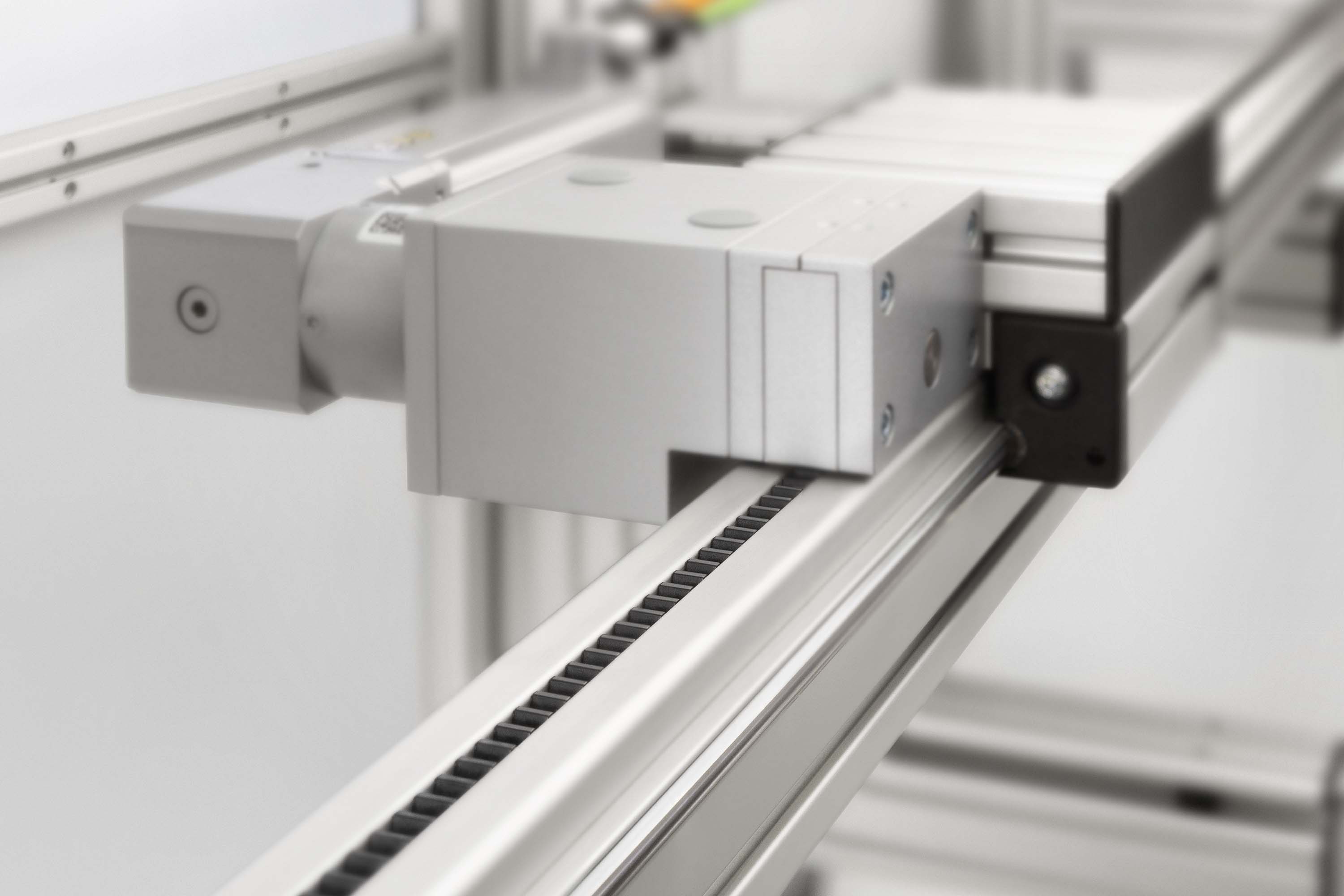
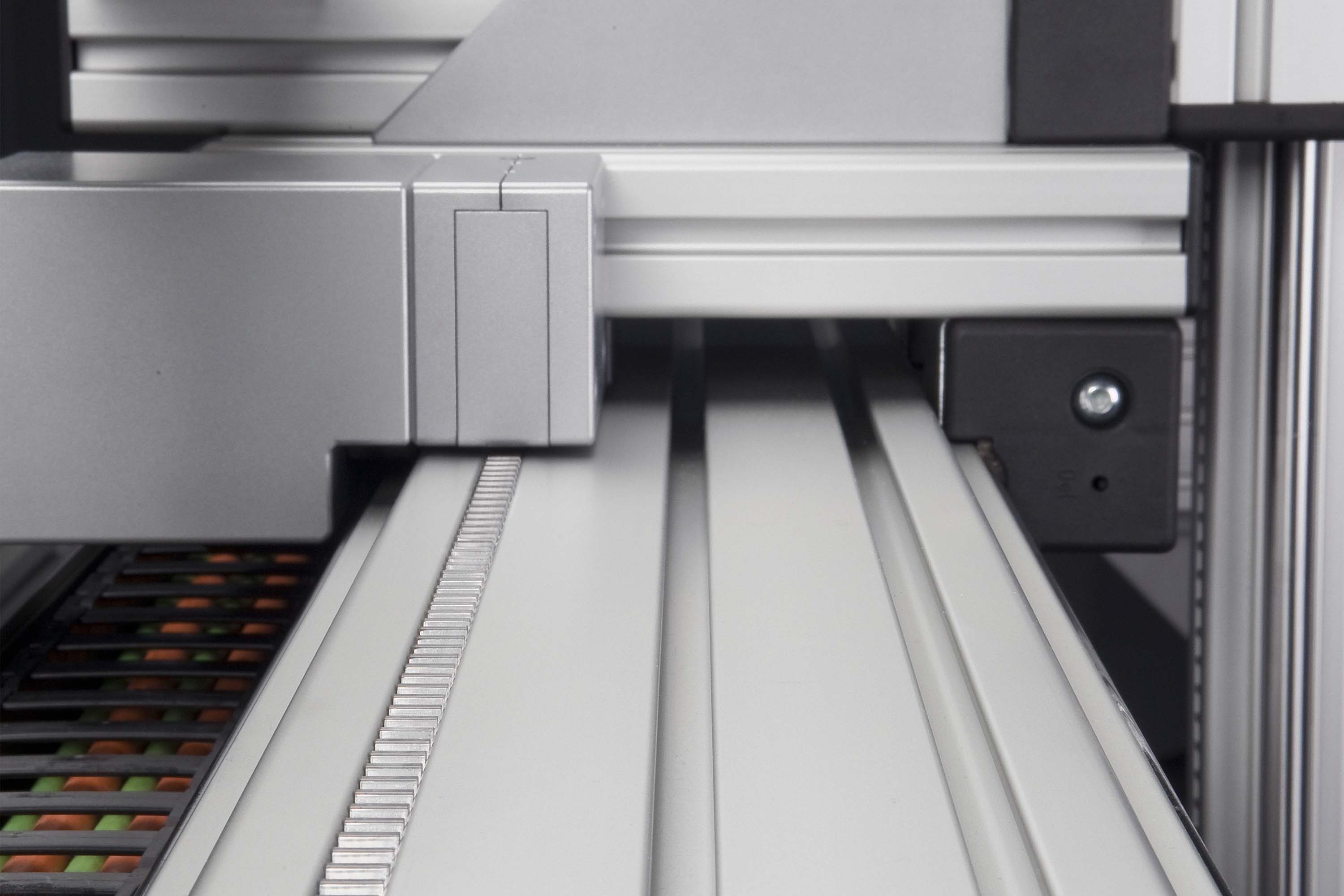
- Zahnstangenantrieb: Hier greift ein Zahnrad schlupffrei in eine gerade Zahnstange ein. Die Drehbewegung des Motors wird so direkt in eine lineare Bewegung umgesetzt. Der Zahnstangenantrieb wird häufig in Anwendungen eingesetzt, wo hohe Lasten und lange Verfahrwege vorkommen.
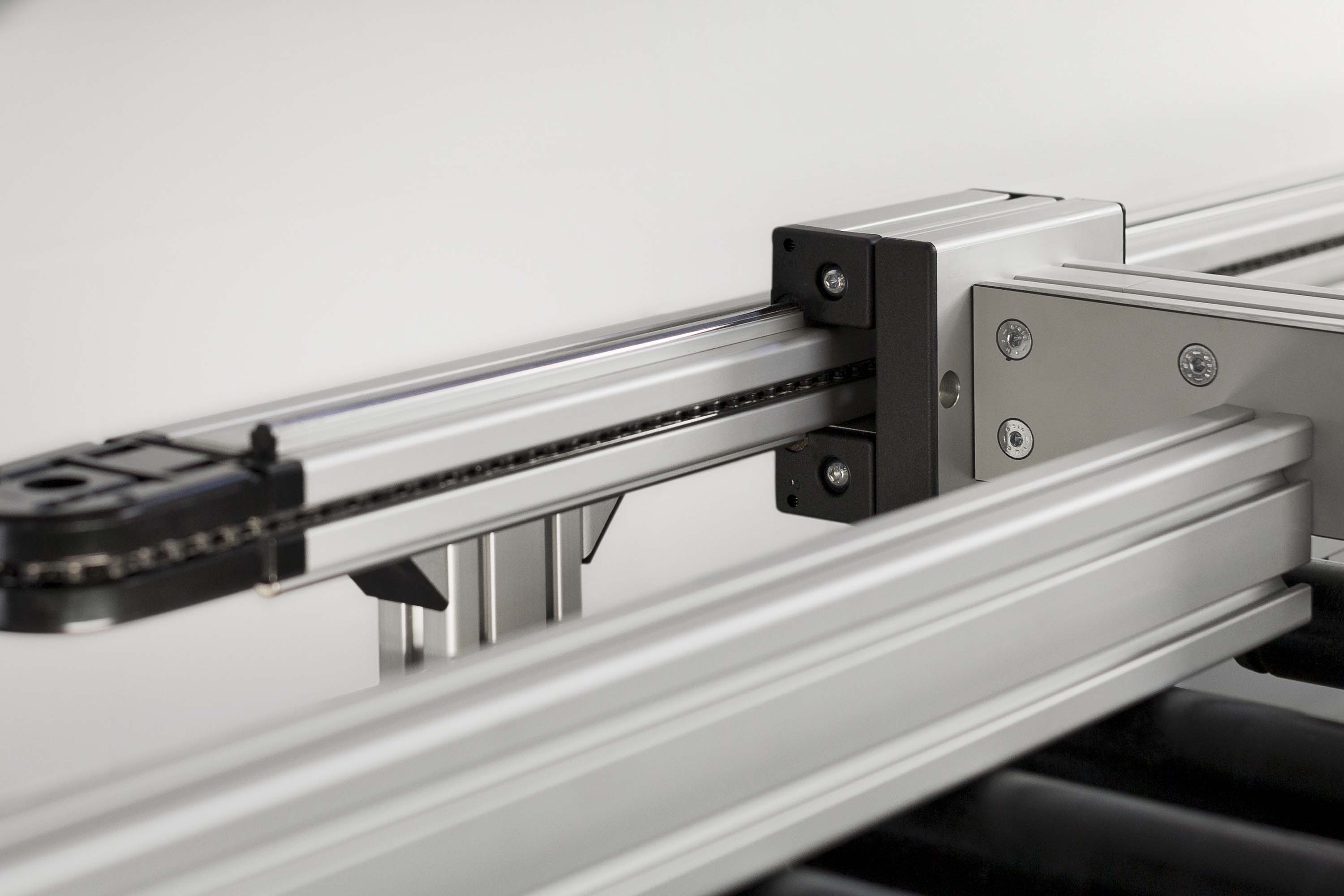
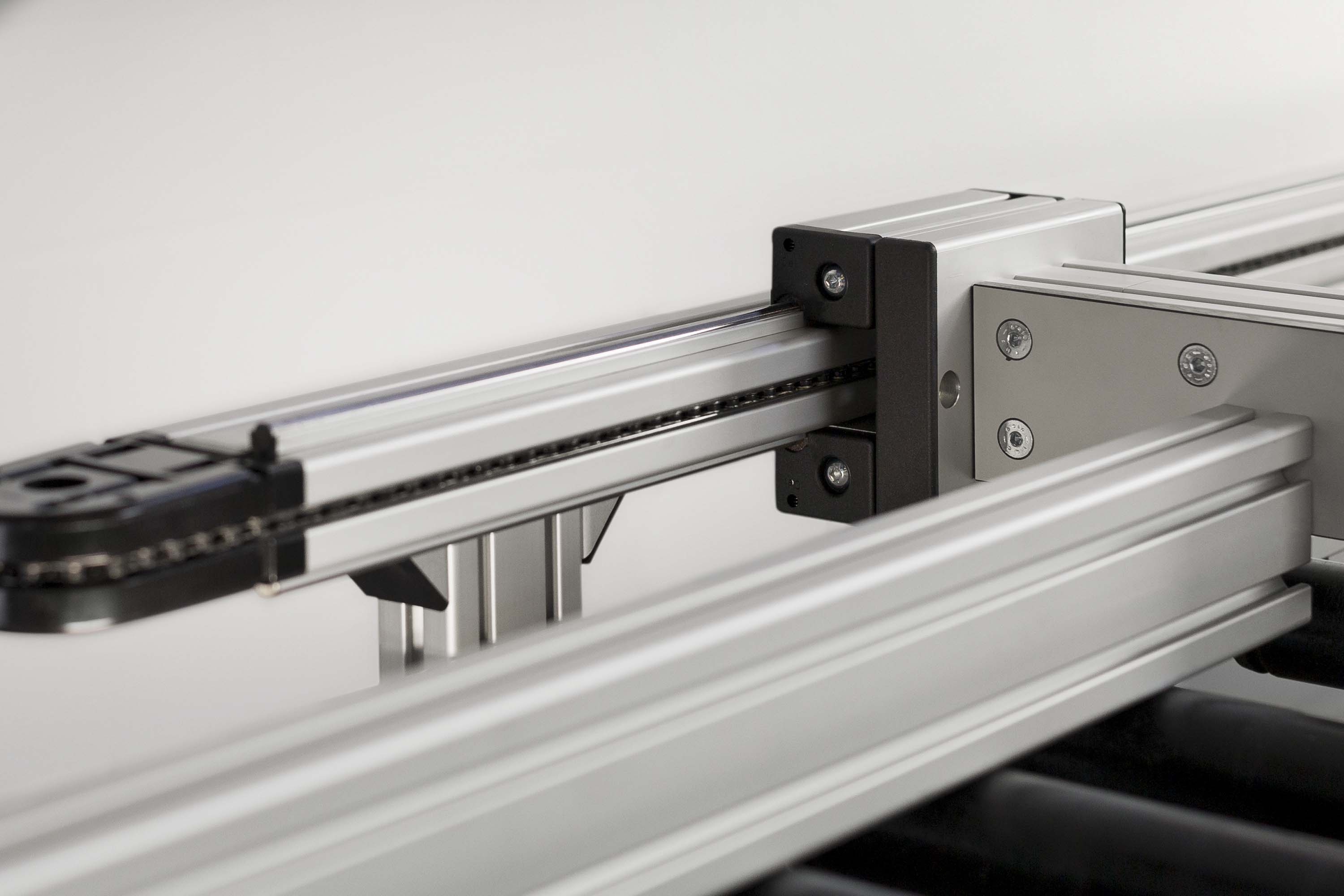
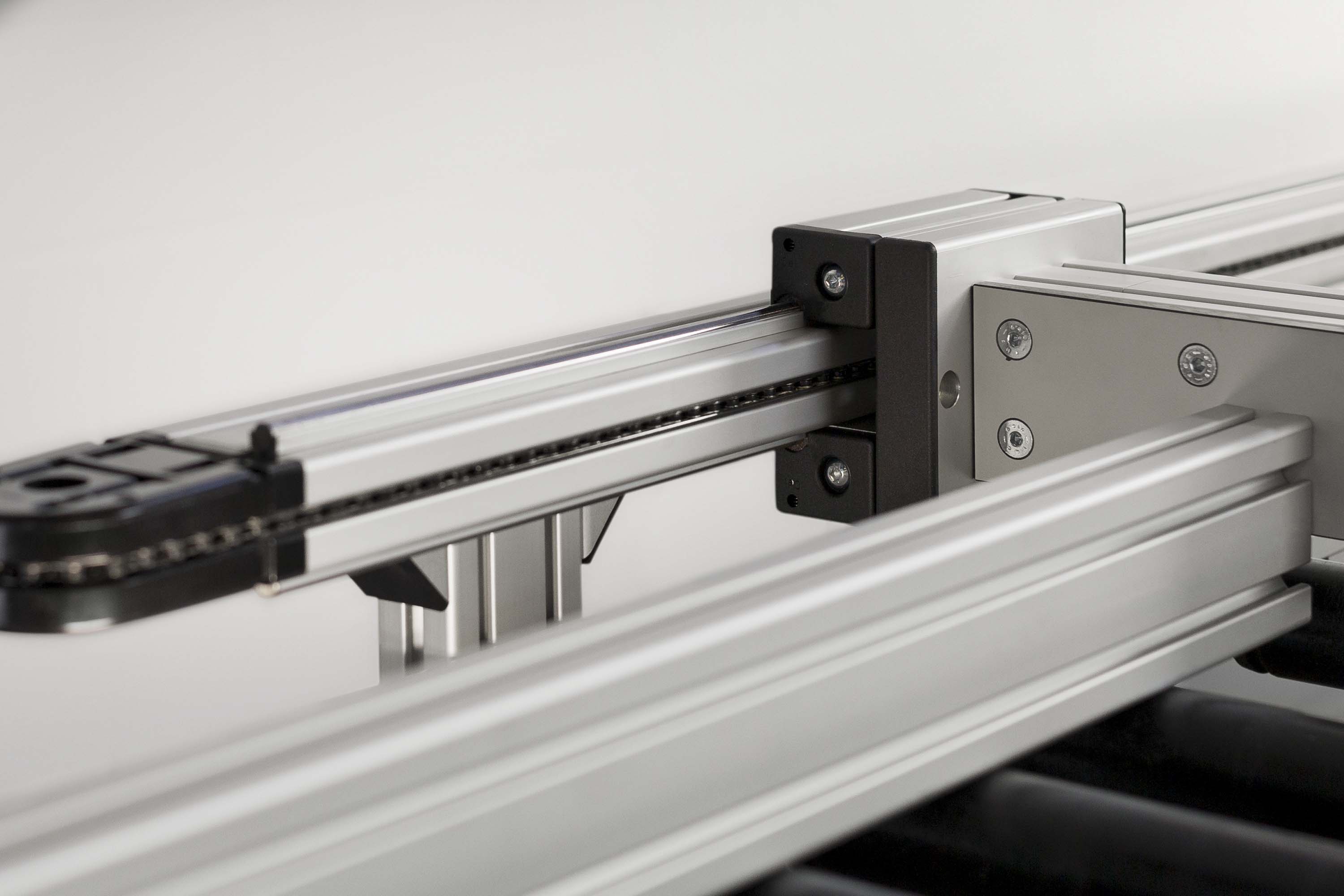
- Kettentrieb: Ähnlich wie beim Zahnriemenantrieb wird die Drehbewegung des Motors auf eine geschlossene Stahlkette übertragen. Über Kettenräder kann die Kraft der Lineareinheit abgegriffen und in eine lineare Bewegung übertragen werden.
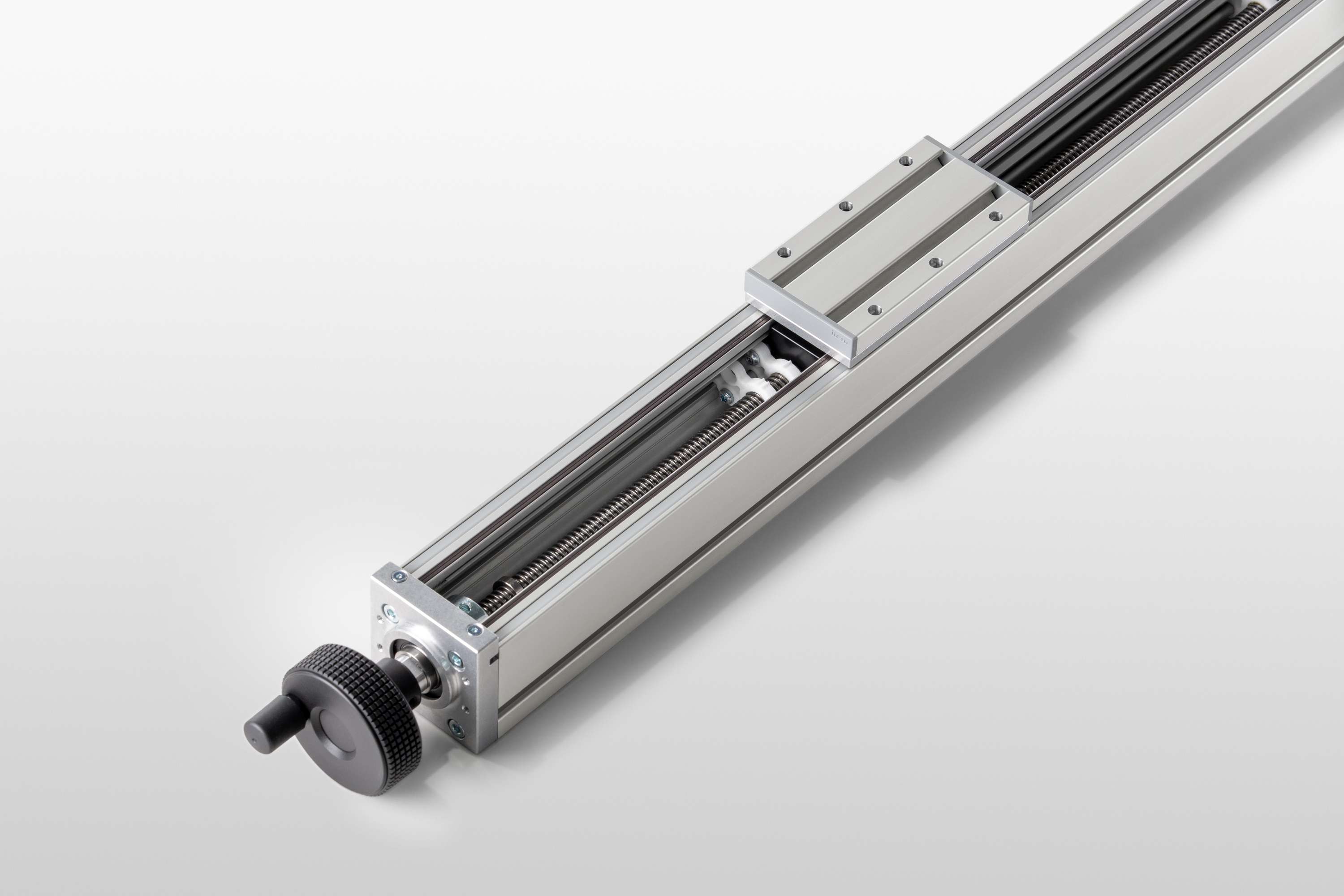
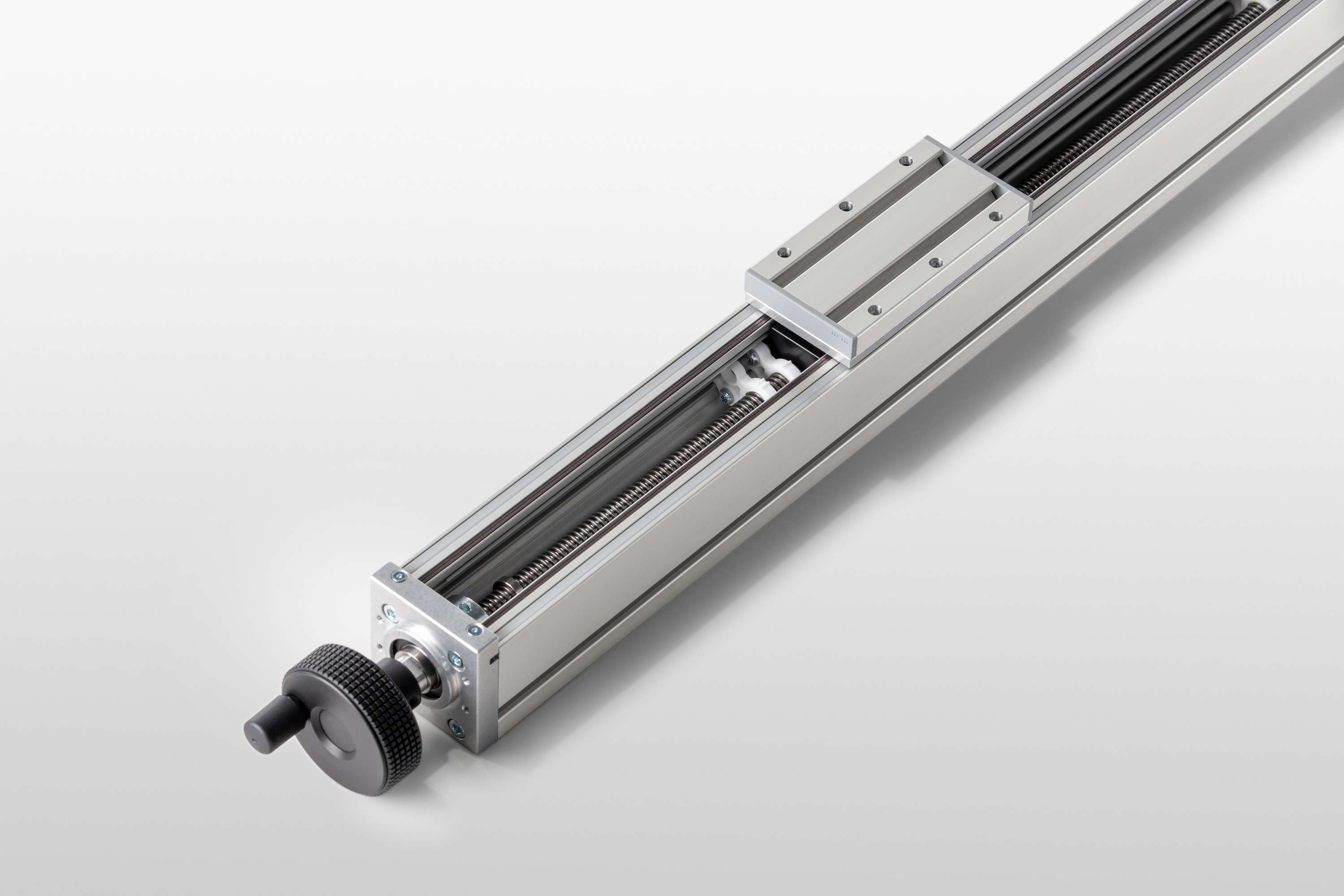
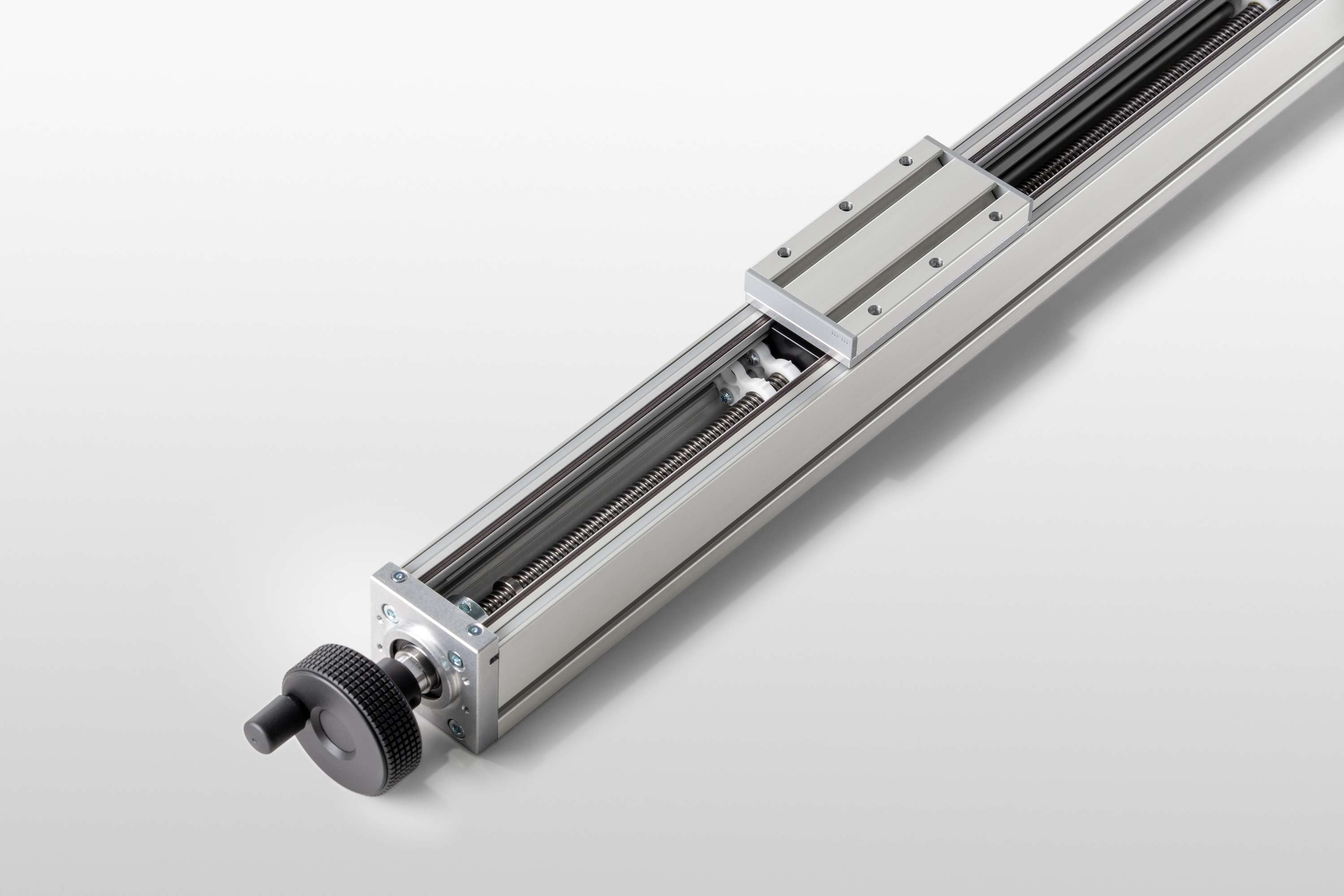
- Kugelgewindetrieb: Eine Präzisionsspindel wandelt ihre Drehbewegung über eine Kugelgewindemutter mit umlaufenden Kugeln in eine präzise Axialbewegung um. Die Steigung des Gewindes bestimmt dabei Geschwindigkeit und Positioniergenauigkeit. Da die Spindellänge die Drehzahl begrenzt, sollte dieser Antrieb nicht für lange Verfahrwege eingesetzt werden.
Welcher Linearantrieb eignet sich für welche Aufgabe?
Linearantriebe sind immer auf eine spezifische Aufgabe ausgerichtet. Die Wahl des richtigen Antriebs hängt von Faktoren wie Kraft, Geschwindigkeit, Präzision und die Bedingungen der Umgebung ab:
- Der Zahnriemenantrieb eignet sich für Anwendungen wie Pick-and-Place, Handling, lange Verfahrwege und Anwendungen mit kurzen Taktzeiten.
- Mit dem Zahnstangenantrieb lassen sich Anwendungen mit Vertikalachsen und langen Verfahrwegen umsetzen. Außerdem eignet sich dieser Antrieb für Portalanlagen und schwere Lasten.
- Der Kettentrieb eignet sich für Förderstrecken, Hubtüren, raue Umgebungen und vertikale Anwendungen unter schwierigen Bedingungen.
- Der Kugelgewindetrieb wird häufig für Anwendungen mit höchsten Genauigkeitsanforderungen eingesetzt. Dazu gehören z. B. Prüftechnik, Dosierung und Feinpositionierung.
Welche Linearantriebe bietet item an?
item bietet verschiedene Antriebslösungen an – vom Zahnriemenantrieb über Kettentrieb bis hin zu Kugelgewindetrieben. Dank des item Baukastenprinzips lassen sich alle Antriebe für verschiedenste Lineartechnik-Lösungen einsetzen. Dabei gibt es für jede Anforderung die passende Antriebstechnologie. Die Online Tools item MotionDesigner®️ und item MotionSoft®️ unterstützen Sie bei der Auslegung und Inbetriebnahme.
-
Beispielsätze:
- Der Linearantrieb ist ein zentrales Element jeder Lineareinheit.
- Ein Linearantrieb eignet sich besonders für Anwendungen mit präziser und geradliniger Bewegung, zum Beispiel in der Robotik oder Verpackungstechnik.
- Ein Zahnriemenantrieb überträgt die Drehbewegung des Motors über einen gezahnten Riemen in eine Linearbewegung.

Drive (linear technology)
Description:
Definition
What is a linear drive?
A linear drive is a mechanical element that is used to convert electrical energy into straight-line motion along an axis. It is a linear technology component.
A linear drive is usually used to convert the rotary motion of a motor in such a way that it will move a carriage in a straight line along a guide rail. The aim is to convert the motor’s energy into straight-line motion as efficiently as possible while also absorbing any transverse forces that may be generated during this process.
A linear drive is usually used to convert the rotary motion of a motor in such a way that it will move a carriage in a straight line along a guide rail. The aim is to convert the motor’s energy into straight-line motion as efficiently as possible while also absorbing any transverse forces that may be generated during this process.
Good to know
What components make up a linear motion drive solution?
A complete drive solution comprises the following components:
- Motor: The motor converts electrical energy into mechanical energy. Every motor has a specification plate indicating data such as torque, speed and efficiency.
- Gearbox: The gearbox adapts the speed and torque generated by the motor to suit the relevant application.
- Encoder system (configuration dependent): Encoder systems are sensors that are permanently mounted on the rotor shaft. They continuously supply the controller with information about the position of the rotor and speed of the rotor shaft.
- Controller: The controller receives a continuous stream of information about the position of the rotor and the speed of the motor via an encoder system. It ultimately tells the motor what speed and torque the drive is to be operated at.
- Coupling: The coupling connects the drive solution to the linear axis that is to be driven.
You can gain an in-depth insight into the fundamental principles of drive technology in a free learning module in the item Academy.
What is the difference between a linear drive and a linear motor?
A linear drive (sometimes also called a “linear applicator”) converts the rotary motion of a motor into straight-line motion via a belt or ball screw, for example. By contrast, a linear motor generates linear motion directly, without having to convert rotary motion. Which of these two solutions is most suitable for a specific application depends on the relevant requirements and budget.
What types of linear drive are available?
There are several types of linear drive, and these differ in terms of their speed, precision, power and application area:
- Timing-belt drive: In this system, a toothed belt locks mechanically around a pulley driven by a motor. The rotary motion of the pulley is thus converted into linear motion that moves the carriage with minimal slippage and energy losses. This drive runs quietly and enables rapid changes in direction. It is ideal for high speeds and long travel distances.
- Rack drive: In this system, a gearwheel (called a “pinion”) interlocks with a straight, toothed bar (called a “rack”), thereby eliminating slippage. The rotary motion of the motor is thus converted directly into linear motion. A rack drive (or “rack and pinion mechanism”) is often used in applications that involve high loads and long travel distances.
- Chain drive: In this system, which is similar to a timing-belt drive, the rotary motion of the motor is transmitted via a continuous steel chain. Sprocket wheels can be used to pick up force from the linear unit and convert it into linear motion.
- Ball screw drive: In this system (sometimes called a “ball screw mechanism”), the motor turns a high-precision screw (or “spindle”) and this rotary motion is converted into precise axial motion via a nut on the screw that contains circulating balls (a “ball screw nut”). Speed and positioning accuracy are largely determined by the lead on the thread of the screw. As rotary speed is limited by the length of the screw, this type of drive should not be used for long travel distances.
Which linear drive is suitable for which task?
Linear drives are always geared towards a specific task. Which is the right drive for a particular application depends on factors such as power, speed, precision and environmental conditions:
- A timing-belt drive is suitable for e.g. pick-and-place tasks, handling, long travel distances and applications with short cycle times.
- A rack drive is suitable for applications with vertical axes and long travel distances. This type of drive is also suitable for gantry systems and heavy loads.
- A chain drive is suitable for conveyor lines, lifting doors, harsh environments and vertical applications in difficult conditions.
- A ball screw drive is often used when the highest standards of precision are required, such as in inspection technologies, metering applications and high-precision positioning.
What linear drives does item offer?
item offers various drive solutions – from timing-belt drives and chain drives to ball screw drives. Thanks to the modular nature of the item building kit systems, all these drives can be used for a huge range of linear technology solutions. The right drive technology can be found for every requirement. The online tools item MotionDesigner®️ and item MotionSoft®️ will help you with your design and commissioning work.
-
Example sentences:
- A linear drive (linear technology) is a key element in a linear unit.
- A linear drive (linear technology) is ideal for applications involving precise, straight-line motion, such as in robotics and packaging technology.
- A timing-belt drive (linear technology) converts the rotary motion of a motor into linear motion via a toothed belt.

Accionamiento (tecnología lineal)
Description:
Definición
¿Qué es un accionamiento lineal?
Un accionamiento lineal es un elemento mecánico que se utiliza para convertir la energía eléctrica en un movimiento rectilíneo a lo largo de un eje. Es un componente de tecnología lineal.
Un accionamiento lineal se suele utilizar para convertir el movimiento rotatorio de un motor para que desplace un carro en línea recta a lo largo de un perfil guía. El objetivo es convertir la energía del motor en un movimiento rectilíneo de la forma más eficiente posible, absorbiendo al mismo tiempo las fuerzas transversales que se puedan generar durante ese proceso.
Un accionamiento lineal se suele utilizar para convertir el movimiento rotatorio de un motor para que desplace un carro en línea recta a lo largo de un perfil guía. El objetivo es convertir la energía del motor en un movimiento rectilíneo de la forma más eficiente posible, absorbiendo al mismo tiempo las fuerzas transversales que se puedan generar durante ese proceso.
Es bueno saber
¿Cuáles son los componentes de una solución de accionamiento de movimiento lineal?
Una solución de accionamiento completa incluye los componentes siguientes:
- Motor: El motor convierte la energía eléctrica en energía mecánica. Cada motor tiene una placa de especificaciones que indica datos como el par, la velocidad y la eficiencia.
- Reductor: El reductor adapta la velocidad y el par generados por el motor a la aplicación correspondiente.
- Sistema de codificación (dependiente de la configuración): Los sistemas de codificación son sensores que se montan de forma permanente en el eje del rotor. Proporcionan constantemente información al controlador sobre la posición del rotor y la velocidad del eje del rotor.
- Controlador: El controlador recibe continuamente un flujo de información sobre la posición del rotor y la velocidad del motor a través de un sistema de codificación. Indica al motor a qué velocidad y con qué par debe funcionar el accionamiento.
- Acoplamiento: El acoplamiento conecta la solución de accionamiento con el eje lineal que se debe accionar.
El módulo de aprendizaje gratuito disponible en la item Academy ofrece información detallada sobre los principios fundamentales de la tecnología de accionamiento.
¿Cuál es la diferencia entre un accionamiento lineal y un motor lineal?
Un accionamiento lineal (a veces también denominado “aplicador lineal”) convierte el movimiento rotatorio de un motor en movimiento rectilíneo mediante una correa dentada o un husillo de bolas, por ejemplo. Por el contrario, un motor lineal genera directamente un movimiento lineal, sin necesidad de convertir un movimiento rotatorio. Decidir cuál de estas dos soluciones resulta más adecuada para una aplicación concreta depende de los requisitos específicos y del presupuesto disponible.
¿Qué tipos de accionamientos lineales existen?
Existen distintos tipos de accionamientos lineales que difieren en velocidad, precisión, potencia y ámbito de aplicación:
- Accionamiento por correa dentada: En este sistema, una correa de dentada se engrana mecánicamente alrededor de un tambor accionado por un motor. De esta forma, el movimiento rotatorio del tambor se convierte en un movimiento lineal que desplaza el carro con un deslizamiento y una pérdida de energía mínimos. Este accionamiento funciona de forma silenciosa y permite cambios rápidos de dirección. Es ideal para altas velocidades y largas distancias de desplazamiento.
- Accionamiento por cremallera: En este sistema, una rueda de engranaje (denominada “piñón”) se engrana con una barra dentada recta (denominada “cremallera”) eliminado el deslizamiento. De esta forma, el movimiento rotatorio del motor se convierte directamente en movimiento lineal. Un accionamiento por cremallera (o “mecanismo de cremallera y piñón”) se suele utilizar en aplicaciones con grandes cargas y largas distancias de desplazamiento.
- Accionamiento por cadena: En este sistema, que es similar al accionamiento por correa dentada, el movimiento de rotación del eje del motor se transmite a través de una cadena de acero continua. Las ruedas de cadena se pueden utilizar para recoger la fuerza generada por la unidad lineal y convertirla en movimiento lineal.
- Accionamiento por husillo de bolas: En este sistema (a veces denominado “mecanismo de husillo de bolas”), el motor hace girar un husillo de alta precisión (o “pivote”) y ese movimiento rotatorio se convierte en un preciso movimiento axial mediante una tuerca en el husillo que contiene bolas recirculantes (una “tuerca de husillo de bolas”). La velocidad y la precisión de posicionamiento dependen en gran medida del paso de la rosca del husillo. Como la velocidad de giro está limitada por la longitud del husillo, este tipo de accionamiento no debería utilizarse para distancias de desplazamiento largas.
¿Qué accionamiento lineal es adecuado para cada tarea?
Los accionamientos lineales están siempre orientados a una tarea específica. La adecuación de un accionamiento para una aplicación concreta depende de factores como la potencia, la velocidad, la precisión y las condiciones ambientales:
- Un accionamiento con correa dentada es adecuado, por ejemplo, para tareas de recogida y colocación, manipulación, largas distancias de desplazamiento y aplicaciones con tiempos de ciclo cortos.
- Un accionamiento por cremallera es adecuado para aplicaciones con ejes verticales y largas distancias de desplazamiento. Este tipo de accionamiento también es adecuado para sistemas de pórtico y grandes cargas.
- Un accionamiento por cadena es adecuado para cintas transportadoras, puertas levadizas, entornos exigentes y aplicaciones verticales en condiciones difíciles.
- Un accionamiento mediante husillo de bolas se suele utilizar cuando se requieren los más altos estándares de precisión, como en tecnologías de inspección, aplicaciones de dosificación y posicionamiento de alta precisión.
¿Qué accionamientos lineales ofrece item?
item ofrece diversas soluciones de accionamiento: desde accionamientos con correa dentada y por cadena hasta accionamientos mediante husillo de bolas. Gracias a la construcción modular de los sistemas de item, todos estos accionamientos pueden utilizarse en una amplia variedad de soluciones de tecnología lineal. Puede encontrarse la tecnología de accionamiento adecuada para cada requisito. Las herramientas online item MotionDesigner®️ e item MotionSoft®️ le serán de gran ayuda en el diseño y la puesta en marcha de sus soluciones.
accionamiento lineal
-
Ejemplos de uso:
- Un accionamiento lineal es un elemento clave dentro de una unidad lineal.
- Un accionamiento lineal es ideal para aplicaciones que requieren un movimiento rectilíneo preciso, como en robótica y en tecnología de embalaje.
accionamiento por correa dentada
-
Ejemplos de uso:
- Un accionamiento por correa dentada convierte el movimiento rotatorio de un motor en un movimiento lineal.