

Schrittmotor
Beschreibung:
Ein weiterer typischer Anwendungsbereich sind wiederholbare Aufgaben ohne komplexes Feedback. Diese Aufgaben kommen zum Beispiel in folgenden Branchen vor:
Ein weiterer Anwendungsbereich ist die Positionierung von Sensor- und Kamerasystemen.
Definition
Was ist ein Schrittmotor?
Ein Schrittmotor ist ein bürstenloser Elektromotor, der elektrische Impulse in präzise mechanische Einzelschritte umwandelt. Er wird auch als Impulsmotor oder Steppermotor bezeichnet. Pro Impuls bewegt sich der Rotor um einen festgelegten Winkel. Dadurch kann der Motor ohne Rückführsensor eine präzise Position anfahren. Typischerweise sind 200 Schritte pro Umdrehung möglich. Das entspricht einem Schrittwinkel von 1,8 Grad.
Gut zu wissen
Wie funktioniert ein Schrittmotor?
Ein Schrittmotor wandelt elektrische Impulse in präzise Drehbewegungen um. Er besteht aus einem Stator (der feste äußere Teil mit Elektromagneten) und einem Rotor (der drehbare Kern, meist magnetisch ausgeführt). Durch jeden elektrischen Impuls wird der Rotor um einen festen Winkel weitergedreht. Dabei bewegt er sich nicht fließend, sondern in diskreten Schritten - ähnlich wie der Sekundenzeiger einer Uhr. Die exakte Position des Rotors wird durch die Anzahl der gesendeten Impulse definiert, wodurch eine hohe Positioniergenauigkeit gegeben ist. Auch im Stillstand hat ein Schrittmotor ein hohes Haltemoment.
In der Regel unterscheidet man zwischen einem unipolaren und einem bipolaren Schrittmotor. Ein unipolarer Schrittmotor wird über fünf bis sechs Anschlüsse angesteuert, während ein Schrittmotor mit bipolaren Motoren und deren vier Anschlüssen ein höheres Drehmoment hat.
In der Regel unterscheidet man zwischen einem unipolaren und einem bipolaren Schrittmotor. Ein unipolarer Schrittmotor wird über fünf bis sechs Anschlüsse angesteuert, während ein Schrittmotor mit bipolaren Motoren und deren vier Anschlüssen ein höheres Drehmoment hat.
Was ist der Unterschied zwischen einem Schrittmotor und einem Servomotor?
Der Unterschied zwischen einem Schrittmotor und einem Servomotor liegt in der Art der Regelung: Schrittmotoren arbeiten mit einem sogenannten Open-Loop-Betrieb. Das bedeutet, dass kein externer Sensor benötigt wird, um die Position des Rotors zu bestimmen und diesen zurückzuführen. Synchron-Servomotoren hingegen arbeiten im Closed-Loop-Betrieb: Es wird ein Encoder benötigt, der kontinuierlich Rückmeldung über die aktuelle Position des Rotors gibt.
Schrittmotoren sind eine kostengünstige Automatisierungslösung und eignen sich optimal für einfache, präzise Positionieraufgaben bei niedrigen Drehzahlen. Für viel Dynamik und hohe Anforderungen an Geschwindigkeit und Regelgenauigkeit kommt in der Regel der Servomotor zum Einsatz.
Schrittmotoren sind eine kostengünstige Automatisierungslösung und eignen sich optimal für einfache, präzise Positionieraufgaben bei niedrigen Drehzahlen. Für viel Dynamik und hohe Anforderungen an Geschwindigkeit und Regelgenauigkeit kommt in der Regel der Servomotor zum Einsatz.
Wie steuert man einen Schrittmotor an?
Schrittmotoren werden meist über eine Steuerung und einen Leistungstreiber angesteuert. Bei der Steuerung handelt es sich zum Beispiel um einen Mikrocontroller. Dieser erzeugt digitale Pulse, die die Position, Geschwindigkeit und Richtung definieren. Der Leistungstreiber wandelt die Steuersignale in den benötigten Spulenstrom um, wobei die Anzahl der gesendeten Pulse den zurückgelegten Weg, die Frequenz der Pulse sowie die Geschwindigkeit festlegt. Kehrt man die Pulsreihenfolge um, lässt sich die Drehrichtung wechseln.
Gängige Ansteuerungsmethoden sind:
Gängige Ansteuerungsmethoden sind:
- Vollschrittbetrieb: Das ist die einfachste Methode, mit der man das maximale Drehmoment erreicht.
- Halbschrittbetrieb: Dieser Betrieb leistet doppelte Auflösung bei ruhigerem Lauf.
- Mikroschrittbetrieb: Ermöglicht eine sehr feine Positionierung bei reduzierter Vibration.
Was sind typische Anwendungsbeispiele für Schrittmotoren in der Industrie und Lineartechnik?
Schrittmotoren kommen überall dort vor, wo präzise, wiederholbare Bewegungen gefragt sind, die kein Feedback zur Positionierung benötigen. Zum Beispiel zur präzisen Bewegung von Bauteilen in:
- 3D-Drucker
- CNC-Maschinen
- Scannern
- Robotern
Ein weiterer typischer Anwendungsbereich sind wiederholbare Aufgaben ohne komplexes Feedback. Diese Aufgaben kommen zum Beispiel in folgenden Branchen vor:
- Medizintechnik (z. B. bei Infusionspumpen und Analysegeräten)
- Automatisierungstechnik (z. B. bei Verpackungsmaschinen und Förderbändern)
- Kfz-Bereich (z. B. bei Heizungs- und Klimaklappen)
Ein weiterer Anwendungsbereich ist die Positionierung von Sensor- und Kamerasystemen.
Welche Schrittmotoren bietet item an?
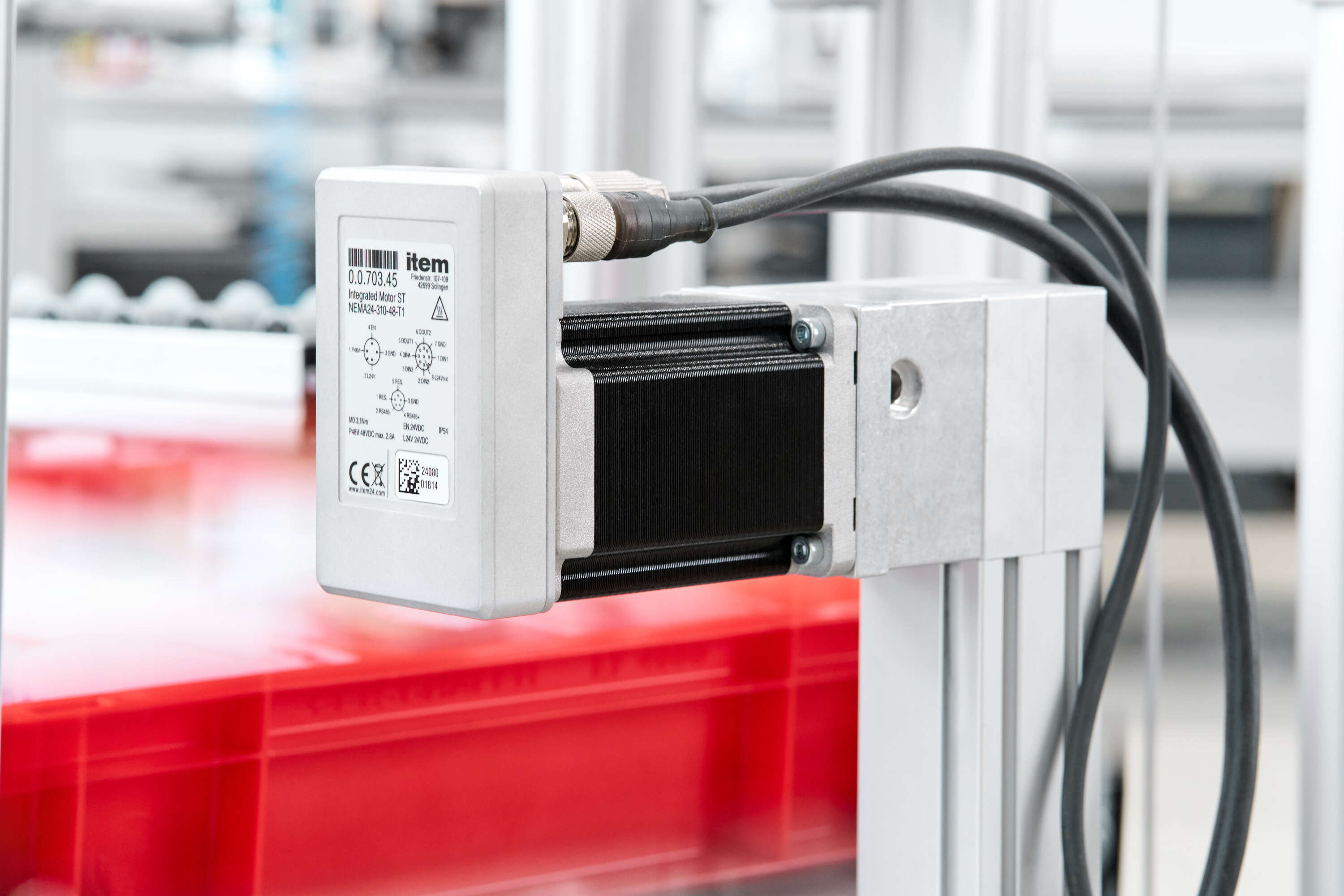
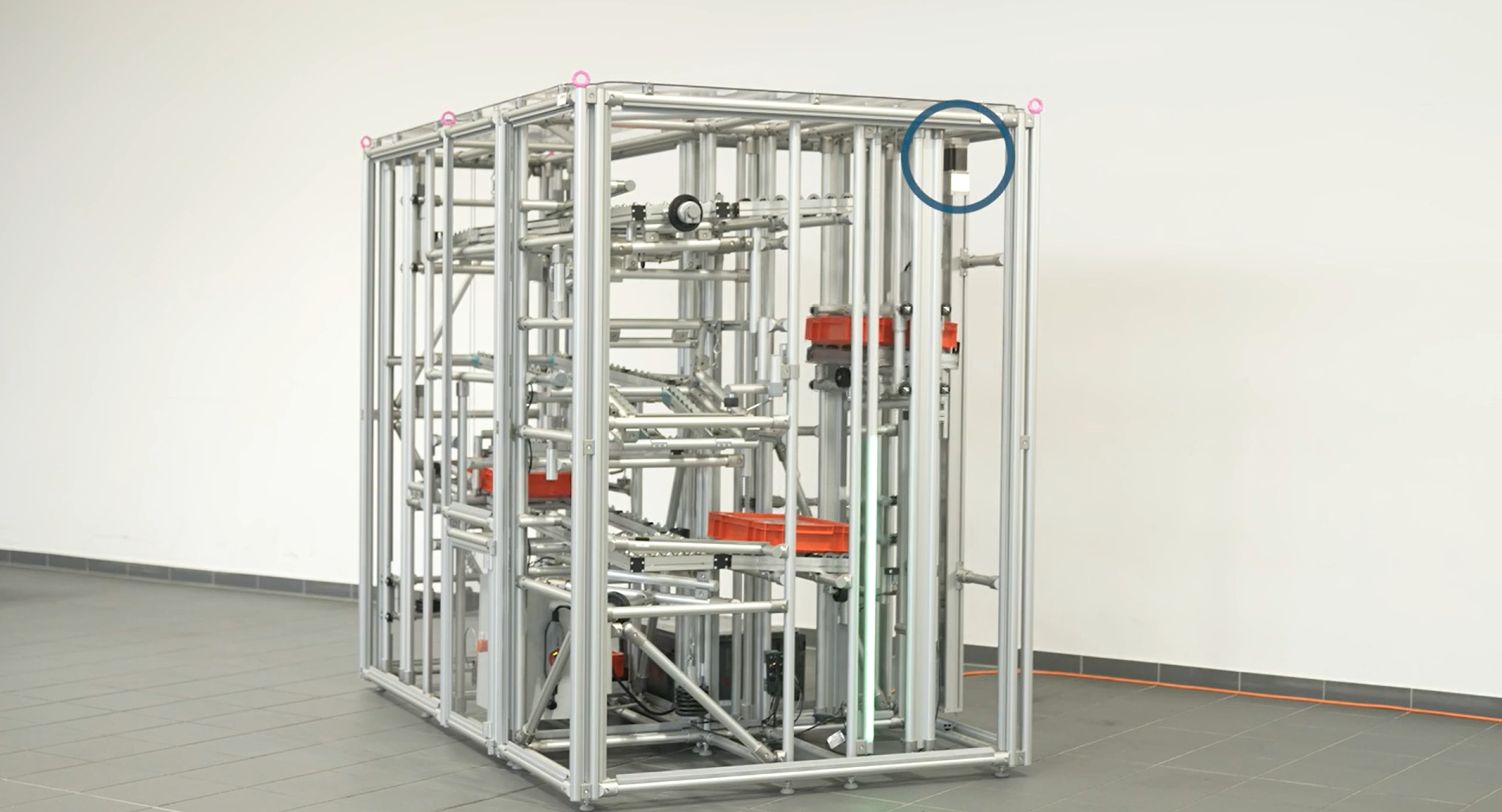
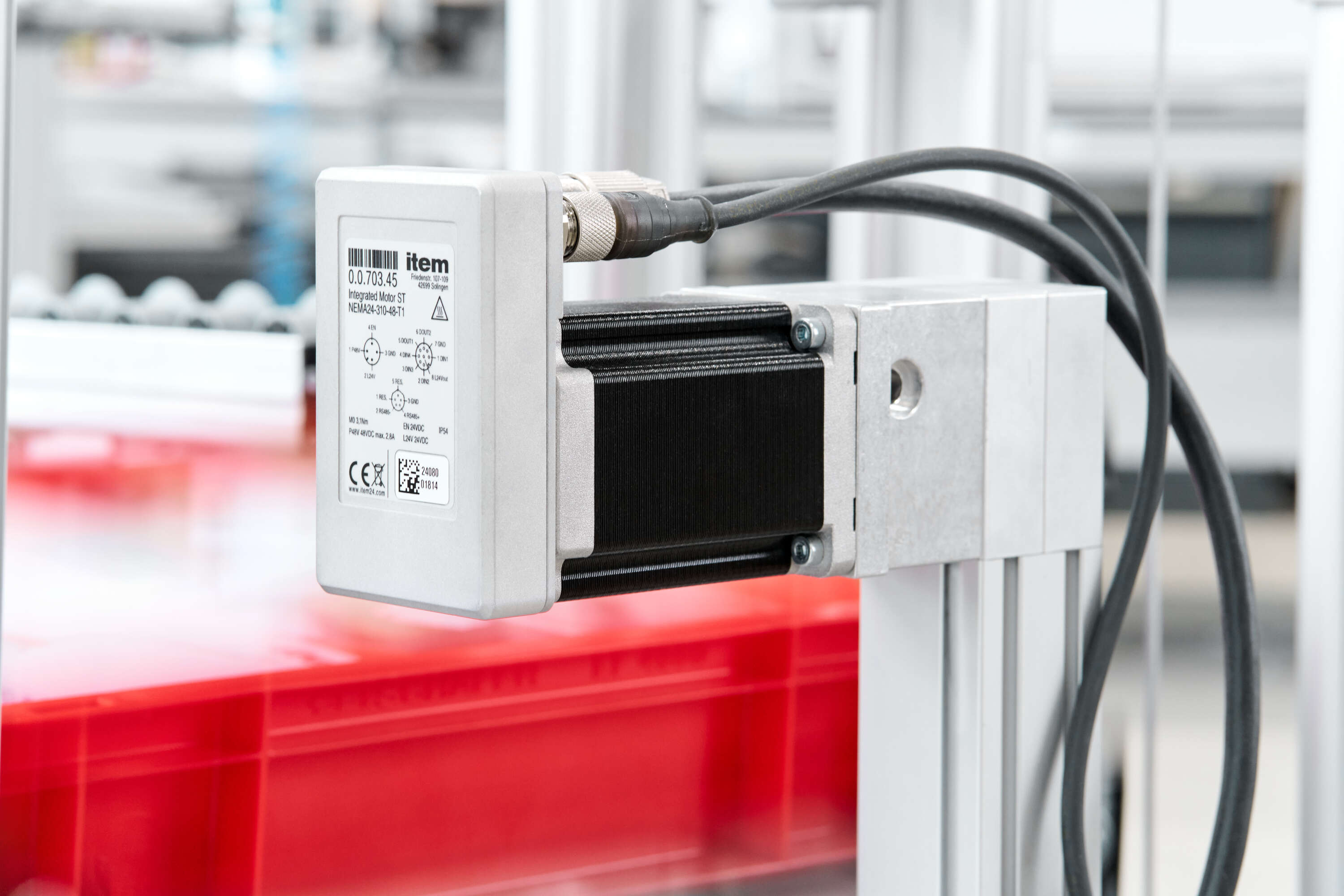
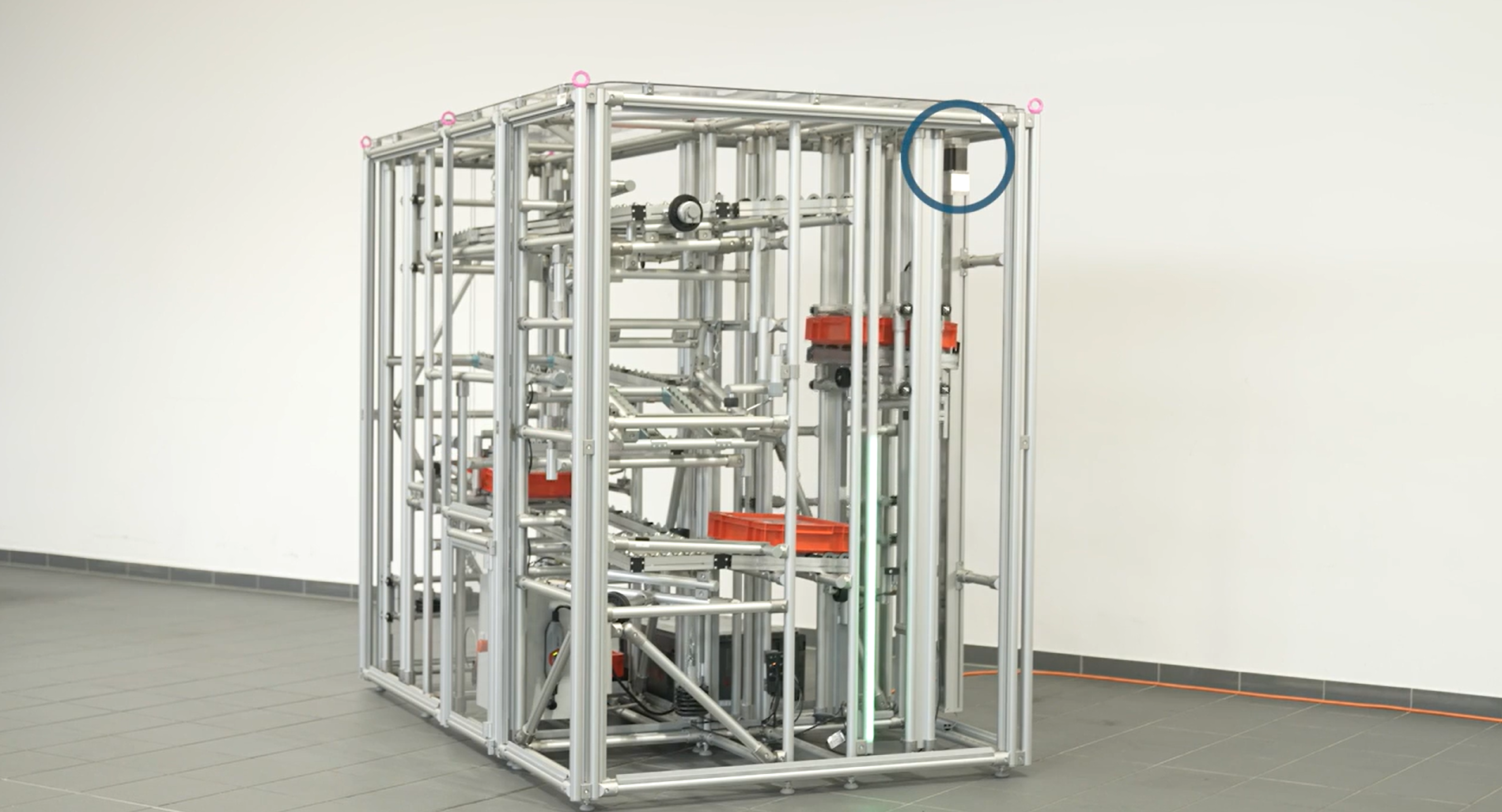
item bietet mit dem Integrierten Schrittmotor NEMA24 eine kompakte Lösung für Automatisierungsaufgaben mit linearer Bewegung an. Der Motor verfügt über eine integrierte Steuerung und lässt sich ohne übergeordnete SPS betreiben. Er ist getriebelos aufgebaut und kann direkt mit item Lineareinheiten als Plug-and-Play-Lösung kombiniert werden. Zur Inbetriebnahme steht die kostenfreie Software item MotionSoftStepper zur Verfügung.
-
Beispielsätze:
- Ein Schrittmotor wandelt elektrische Impulse in präzise mechanische Schritte um.
- Mit einem Schrittmotor lässt sich eine exakte Position anfahren, ohne dass ein externer Sensor benötigt wird.
- Auch im Stillstand hält ein Schrittmotor durch ein hohes Haltemoment zuverlässig seine Position.

stepper motor
Description:
Reproducible tasks without complex feedback requirements are another typical area of application. Tasks of this kind are found, for example, in the following sectors:
A further area of application is positioning sensor and camera systems.
Definition
What is a stepper motor?
A stepper motor is a brushless electric motor that converts electrical pulses into precise individual mechanical steps. It is also known as a step motor or stepping motor. Each pulse rotates the rotor through a fixed angle, meaning the motor enables movement to a precise position without a feedback sensor. Typically, 200 steps per revolution are possible, which corresponds to a step angle of 1.8 degrees.
Good to know
How does a stepper motor work?
A stepper motor converts electrical pulses into precise rotational movements. It consists of a stator (the stationary outer part with electromagnets) and a rotor (the central, rotating part, which has a magnetic design in most cases). Each electrical pulse rotates the rotor through a fixed angle. The motion is not flowing – it consists of discrete steps, rather like the second hand of a clock. The rotor’s exact position is defined by the number of pulses transmitted, which ensures excellent positioning accuracy. A stepper motor also exhibits a high holding torque when in an idle state.
A distinction is normally made between a unipolar and a bipolar stepper motor. A unipolar stepper motor has a simpler design, while a bipolar stepper motor can generate a higher torque.
A distinction is normally made between a unipolar and a bipolar stepper motor. A unipolar stepper motor has a simpler design, while a bipolar stepper motor can generate a higher torque.
What is the difference between a stepper motor and a servomotor?
The difference between a stepper motor and a servomotor lies in the way the motor is controlled. Although closed loop stepper motor operation is possible, stepper motors normally have an open loop operating principle. In other words, no external sensor is required to determine the rotor’s position and feed it back. Synchronous servomotors, on the other hand, always have a closed loop operating principle. An encoder is needed to provide continuous feedback about the rotor’s current position.
Stepper motors are a cost-effective automation solution and are ideal for simple, precise positioning tasks at low rotational speeds. Servomotors are normally used when high demands in terms of dynamics, speed and control accuracy need to be met.
Stepper motors are a cost-effective automation solution and are ideal for simple, precise positioning tasks at low rotational speeds. Servomotors are normally used when high demands in terms of dynamics, speed and control accuracy need to be met.
How do you control a stepper motor?
In most cases, a controller and driver are used to control a stepper motor. The controller can, for example, be a microcontroller, which generates digital pulses defining the position, speed and direction. The driver converts the control signals into the necessary coil current. The number of pulses transmitted defines the distance covered, the pulse frequency and the speed. The direction of rotation can be changed by reversing the pulse sequence.
Standard control methods are as follows:
Standard control methods are as follows:
- Full-step mode: This is the simplest way of achieving the maximum torque.
- Half-step mode: This mode results in double the resolution and smoother running.
- Micro-step mode: Besides enabling very fine positioning, this mode also reduces the level of vibration.
What are typical sample applications for stepper motors in linear technology and industry?
Stepper motors are used wherever precise, reproducible movements are called for that do not require any feedback on positioning. One example is the precise movement of components in:
- 3D printers
- CNC machines
- Scanners
- Robots
Reproducible tasks without complex feedback requirements are another typical area of application. Tasks of this kind are found, for example, in the following sectors:
- Medical technology (e.g. infusion pumps and analytical equipment)
- Automation technology (e.g. packaging machinery and conveyor belts)
- Automotive sector (e.g. heating and air-conditioning valves)
A further area of application is positioning sensor and camera systems.
What stepper motors does item offer?
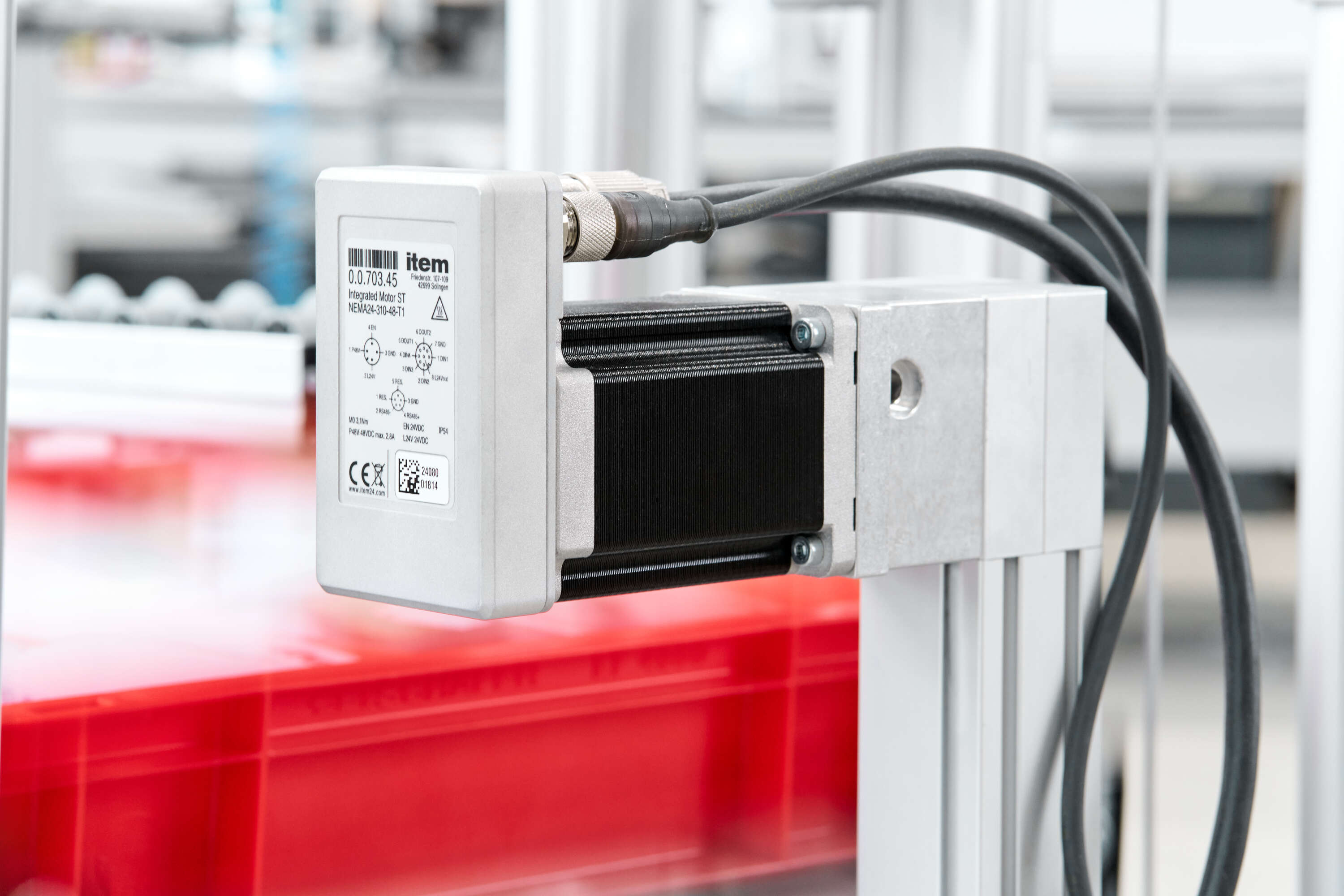
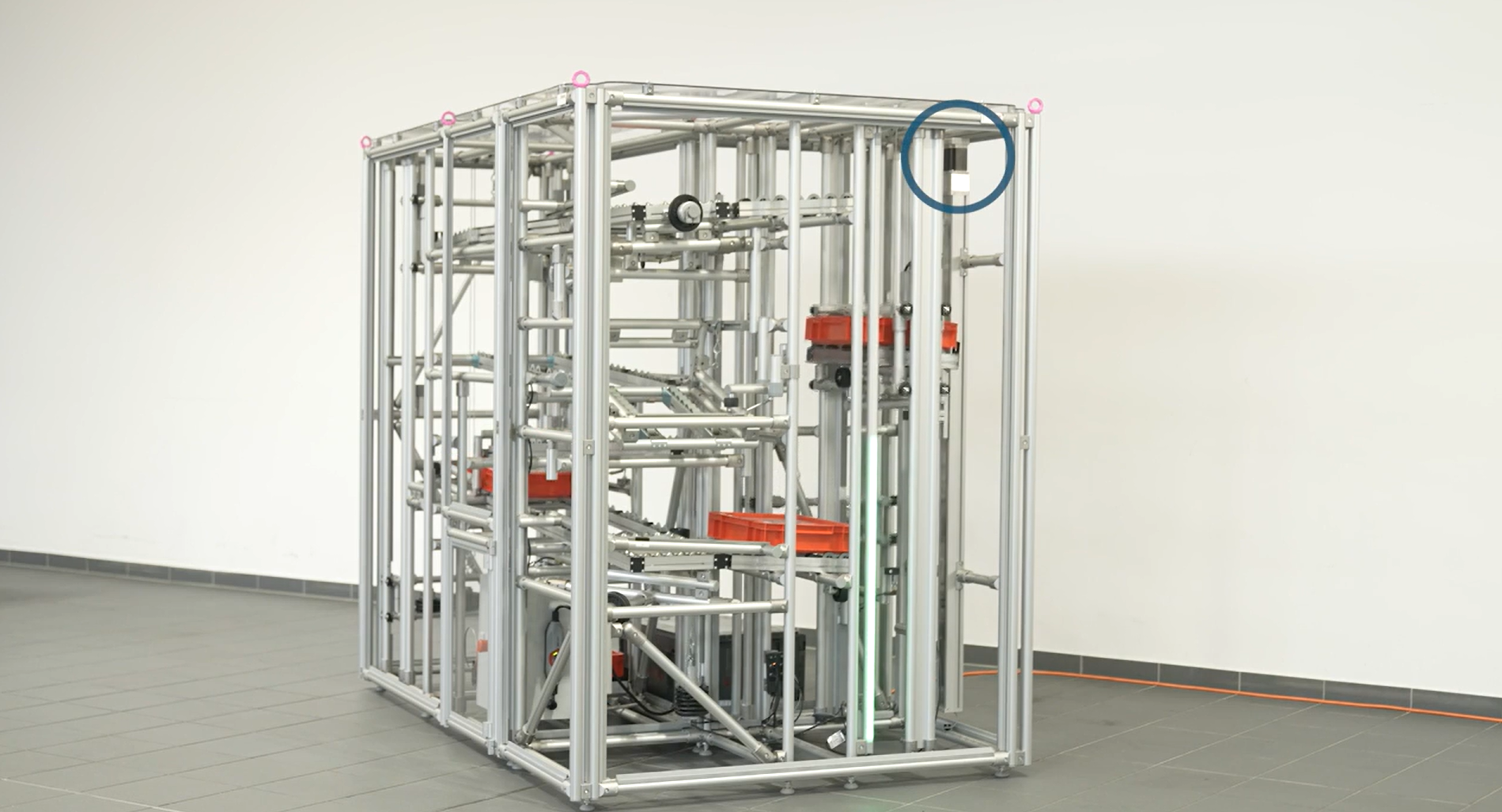
item offers an integrated NEMA 24 stepper motor (Integrated Motor ST NEMA24 -310-48-T1) as a compact solution for automation tasks involving linear movement. This motor has an integrated control system and can be operated without a higher-level PLC. It has a gearless design and can be combined directly with item Linear Units as a plug-and-play solution. Free item MotionSoftStepper software is available for commissioning the motor.
-
Example sentences:
- A stepper motor converts electrical pulses into precise mechanical steps.
- A stepper motor enables movement to a precise position without the need for an external sensor.
- A stepper motor reliably maintains its position even when in an idle state, thanks to a high holding torque.

Motor paso a paso
Description:
Las tareas reproducibles que no necesitan una retroalimentación compleja son otra área de aplicación habitual. Las tareas de este tipo se encuentran, por ejemplo, en los siguientes sectores:
Otra área de aplicación son los sistemas de sensores y cámaras de posicionamiento
Definición
¿Qué es un motor paso a paso?
Un motor paso a paso es un motor eléctrico sin escobillas que convierte pulsos eléctricos en precisos pasos mecánicos individuales. También se conoce como motor de pasos. Cada pulso hace girar el rotor un ángulo fijo, de modo que el motor permite realizar un movimiento hasta una posición precisa sin necesidad de un sensor de retroalimentación. Normalmente, una revolución completa se divide en 200 pasos, lo que equivale a un ángulo de paso de 1,8 °.
Es bueno saber
¿Cómo funciona un motor paso a paso?
Un motor paso a paso convierte pulsos eléctricos en movimientos rotativos precisos. Está compuesto por un estator (la parte exterior fija, equipada con electroimanes) y un rotor (la parte central giratoria, que en la mayoría de los casos presenta un diseño magnético). Cada pulso eléctrico hace girar el rotor un ángulo fijo. El movimiento no es continuo, sino que se realiza en pequeños saltos, de forma similar al avance del segundero de un reloj. La posición exacta del rotor viene determinada por el número de pulsos transmitidos, lo que garantiza una excelente precisión de posicionamiento. Un motor paso a paso también presenta un par de retención alto cuando está en ralentí.
Normalmente se distingue entre motores paso a paso unipolares y bipolares. Un motor paso a paso unipolar tiene un diseño más sencillo, mientras que un motor paso a paso bipolar puede generar un par más elevado.
Normalmente se distingue entre motores paso a paso unipolares y bipolares. Un motor paso a paso unipolar tiene un diseño más sencillo, mientras que un motor paso a paso bipolar puede generar un par más elevado.
¿Cuál es la diferencia entre un motor paso a paso y un servomotor?
La diferencia entre un motor paso a paso y un servomotor radica en la forma en la que se controla el motor. Aunque un motor paso a paso puede funcionar en circuito cerrado, estos motores normalmente funcionan con un principio de circuito abierto. En otras palabras, no se requiere un sensor externo para determinar la posición del rotor ni para proporcionar retroalimentación. Los servomotores síncronos, por el contrario, siempre funcionan en circuito cerrado. Se necesita un codificador para proporcionar una retroalimentación continua sobre la posición concreta del rotor.
Los motores paso a paso son una solución de automatización rentable y resultan ideales para tareas de posicionamiento simples y precisas a velocidades de giro bajas. Los servomotores suelen utilizarse cuando las exigencias de dinámica, velocidad y precisión de control son elevadas.
Los motores paso a paso son una solución de automatización rentable y resultan ideales para tareas de posicionamiento simples y precisas a velocidades de giro bajas. Los servomotores suelen utilizarse cuando las exigencias de dinámica, velocidad y precisión de control son elevadas.
¿Cómo se controla un motor paso a paso?
En la mayoría de los casos, el funcionamiento de un motor paso a paso se controla mediante un controlador y un driver. El controlador puede ser, por ejemplo, un microcontrolador que genera pulsos digitales que definen la posición, la velocidad y la dirección. El driver convierte las señales de control en la corriente necesaria para las bobinas. El número de pulsos transmitidos determina la distancia recorrida, la frecuencia de los pulsos y la velocidad. La dirección de giro se puede modificar invirtiendo la secuencia de pulsos.
Los métodos de control estándar son los siguientes:
Los métodos de control estándar son los siguientes:
- Modo de paso completo: Es la forma más simple de conseguir el par máximo.
- Modo de medio paso: Este modo duplica la resolución y el funcionamiento es más suave.
- Modo micropaso (microstep): Además de permitir una gran precisión de posicionamiento, este modo también reduce el nivel de vibración.
¿Cuáles son las aplicaciones típicas de los motores paso a paso en la tecnología lineal y la industria?
Los motores paso a paso se utilizan siempre que se necesitan movimientos precisos y reproducibles que no requieren retroalimentación sobre la posición. Un ejemplo es el movimiento preciso de componentes en:
- Impresoras 3D
- Máquinas CNC
- Escáneres
- Robots
Las tareas reproducibles que no necesitan una retroalimentación compleja son otra área de aplicación habitual. Las tareas de este tipo se encuentran, por ejemplo, en los siguientes sectores:
- Tecnología médica (ej., bombas de infusión y equipos de análisis)
- Tecnología de automatización (ej., maquinaria de embalaje y cintas transportadoras)
- Sector de la automoción (ej., válvulas de calefacción y aire acondicionado)
Otra área de aplicación son los sistemas de sensores y cámaras de posicionamiento
¿Qué motores paso a paso ofrece item?
item ofrece un motor paso a paso integrado NEMA 24 (Integrated Motor ST NEMA24‑310‑48‑T1) como solución compacta para tareas de automatización que implican movimientos lineales. Este motor incorpora un sistema de control integrado y puede funcionar sin necesidad de un PLC de nivel superior. Presenta un diseño sin engranajes y se puede combinar directamente con las Unidades Lineales de item como una solución plug‑and‑play. item pone a disposición de sus clientes el software gratuito MotionSoftStepper para la puesta en marcha del motor.
-
Ejemplos de uso:
- Un motor paso a paso convierte pulsos eléctricos en pasos mecánicos precisos.
- Un motor paso a paso permite realizar movimientos hasta una posición precisa sin necesidad de un sensor externo.
- Un motor paso a paso mantiene su posición incluso en ralentí gracias a su elevado par de retención.

步进电动机
Description:
步进电动机是一种电动机转子以小步移动的同步电动机。其基本操作原理类似于具有高数量极对的同步电动机。电机的构造具有特定的位置(步数),这样它接受命令时可以步进。
为提高精度或增加步数,转子磁体的磁极都设计有齿。定子绕组不断改变极性使得电枢连续转动。
步进电动机的应用实例包括标绘器、打印机以及自动钻孔机的定位和控制车辆空转时的燃料流。如果使用步进电动机来驱动间距低的主轴,其定位可能精确到微米范围。