
Zerspanung
-
Beispielsätze:
- Beim Bohren sorgt der Anschnitt des Bohrers für den Hauptteil der Zerspanung.
- Ziel des Formteil-Gießens ist, im Urformverfahren nahezu maß- und formgenaue Bauteile und Integralteile herzustellen, um Zerspanungs- und Montage-Aufwände zu minimieren.

chip removal
Description:
The aim of mould casting is to use forming processes to produce components and integral parts with almost identical dimensions and shapes in order to minimise chip removal and assembly outlay. Due to poor chip removal, unfavourable friction conditions and the associated risk of tool breakage, machine taps work at low tapping speeds.
-
Example sentences:
- The aim of mould casting is to use forming processes to produce components and integral parts with almost identical dimensions and shapes in order to minimise chip removal and assembly outlay.
- Due to poor chip removal, unfavourable friction conditions and the associated risk of tool breakage, machine taps work at low tapping speeds.
cutting
Description:
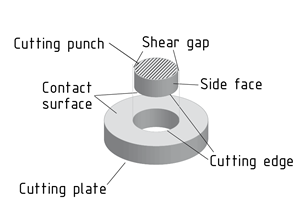
Cutting or Separating is a mechanical removal process that does not involve chip formation. Processes include: Shearing Knife edge cutting Pinching Splitting Fracturing Tearing In sheet metal working in particular, cutting is used in Work stages before, during and after the Forming process. As Plastic deformation takes place on the workpiece during the cutting process, the procedure itself is also similar to forming. In shearing, a distinction is made between processes involving either open or closed cutting lines. Cutting punches and cutting dies on presses and notching and incision create open cutting lines. Closed cutting lines are created by punches, dies, straight and circular knives and by perforating and blanking.
-
Example sentences:
- Panel sawing (guided circular saw for cutting panels) The return stroke (non-cutting stroke) returns the tool to the starting position.
- During three-stage counter cutting, an initial cut is first made on the sheet material.
machining
Description:
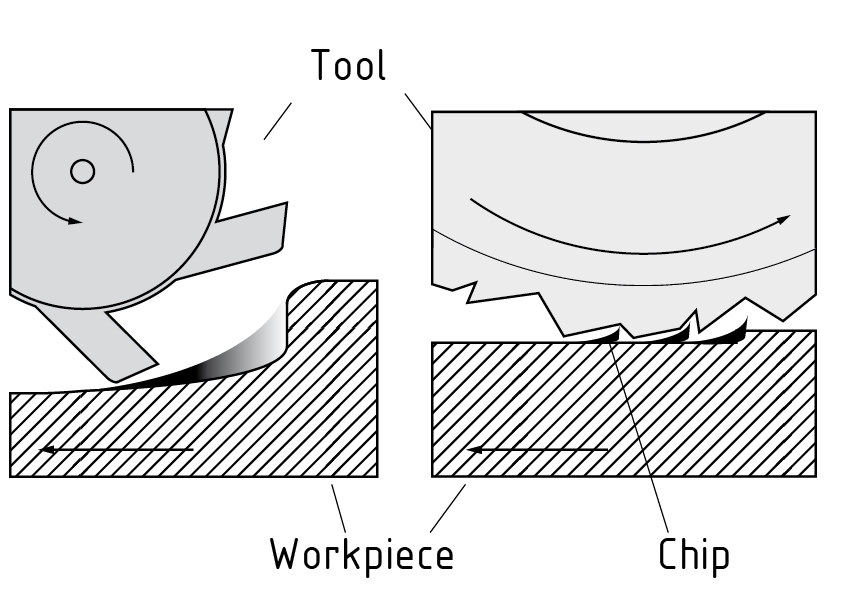
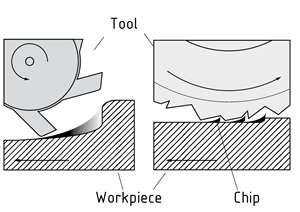
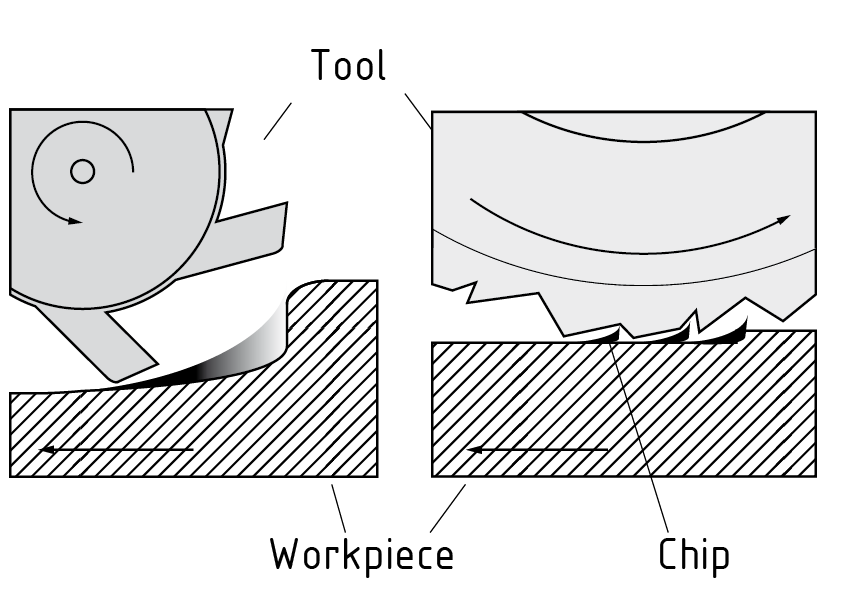
Machining is a mechanical process by which workpieces are formed by removing excess Material in the form of chips. A tapered tool blade is driven into the surface of the workpiece and shaves off a thin layer. The tool materials must be harder than the workpiece. Materials used include tool steels, hard metals, ceramic Cutting materials, sintered materials, corundum and diamond. The tool can have a geometrically defined blade (as used in Turning, boring, and Milling processes). The number of cutters, the shape of the cutting wedge and the alignment with the material can be defined. In the case of machining using geometrically undefined tool cutters (e.g. Grinding, filing, Lapping) the number of cutters, the shape of the cutting edge and the alignment with the workpiece can be defined only via statistical parameters.
-
Example sentences:
- No machining is necessary when using this fastener.
- It's quick, clean, there's no machining involved and the installation can be reconfigured at a later date.
- Platform Cleats are screwed into place from above with no need for profile machining.

corte
Description:
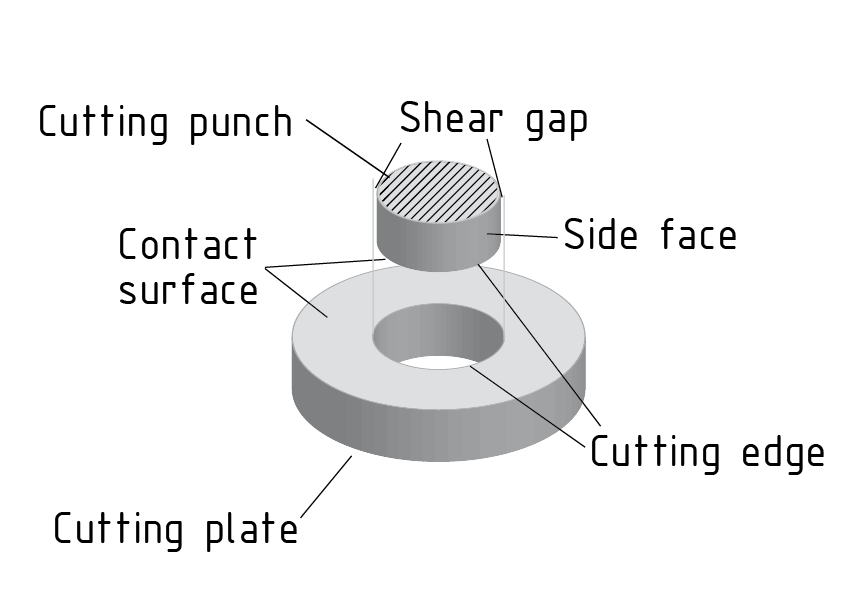
El corte o separación es un proceso de remoción mecánica que no involucra la formación de viruta. Los procesos incluyen: Cizallamiento Corte de borde de cuchillo Pinzamiento Separación Fractura Desgarro En trabajos de laminado en particular, el corte se usa en etapas de trabajo antes, durante y después del proceso de conformado. Una deformación plástica se lleva a cabo en la pieza de trabajo durante el proceso de corte, el proceso mismo es también similar al de conformado. En el cizallamiento, se debe distinguir entre los procesos que involucran ya sea líneas de corte abierto o cerrado. Los punzones de corte o troqueles de corte en prensas, ranurado e incisión crean líneas de corte abiertas. Las líneas de corte cerradas son creadas por punzones, troqueles y cuchillos rectos y circulares, y mediante perforación y estampado. Punzón de corte y placa de corte
maquinado
Description:
El maquinado es un proceso mecánico mediante el cual las piezas de trabajo son conformadas removiendo el material excedente en forma de viruta. La hoja de herramienta afilada es impulsada hacia la superficie de la pieza de trabajo y elimina una capa delgada. Los materiales de la herramienta deben ser más duros que la pieza de trabajo. Los materiales usados incluyen aceros para herramientas, metales duros, materiales cerámicos de corte, materiales sinterizados, corundo y diamante. La herramienta pueden tener una hoja geométricamente definida (como se usa en los procesos de , y ). Se puede definir el número de cortadoras, la forma de la cuña de corte y la alineación con el material. En el caso del maquinado con cortadoras de herramientas no definidas geométricamente (por ejemplo en el , , ) el número de cortadoras, la forma del borde de corte y la alineación con la pieza de trabajo pueden definirse solo mediante parámetros estadísticos. Maquinado con cortadoras definidas y no definidas geométricamente
remoción de virutas

切削
排屑
机械加工
Description:
机械加工是指以碎屑形式除去过量的材料来进行成型的机械工艺。 锥形工具刀片驱进工件表面,刮离一个薄层。刀具材料必须比工件硬。其材料包括工具钢、硬质合金、陶瓷切割材料、烧结材料,刚玉和金刚石。 刀具的刀片具有确定的几何形状(如用于、和工艺)。可以确定刀具的数目、切割楔的形状和与切割材料的找平线。 如果使用几何形状未确定的刀具切割(例如、、),只能通过统计参数来确定刀具的数目、切割楔的形状和与切割材料的找平线。 使用几何形状确定和未确定的刀具进行机械加工 近义词 碎屑